7 HVAC Upgrades That Can Make Your Home More Energy Efficient
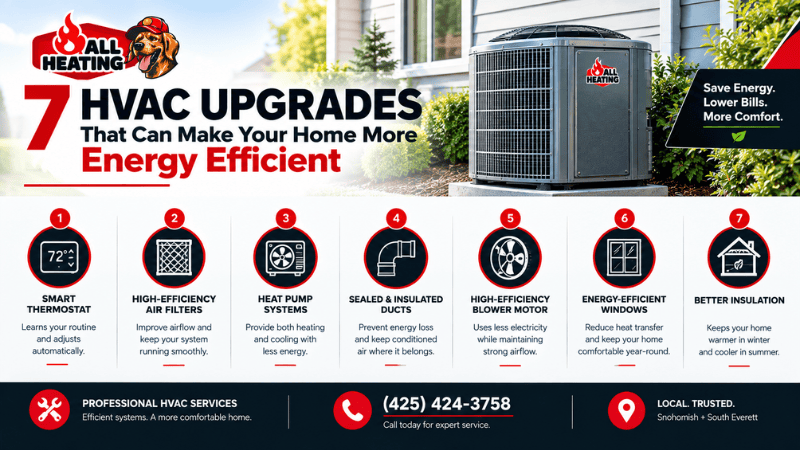
The right energy-efficient HVAC upgrades can improve comfort, reduce wasted energy, and help your heating and cooling system operate more effectively. Options include smart thermostats, appropriate air filters, high-efficiency furnaces, heat pumps, ductwork improvements, and better ventilation. The best upgrade depends on the condition of your existing equipment and home. In 2026, connected thermostats are also becoming more useful, with newer models offering automated scheduling and smarter control features.
Improving your home’s energy efficiency doesn’t always mean replacing the entire HVAC system.
Sometimes, a relatively small upgrade can improve how your system operates. In other cases, the biggest opportunity may be an aging furnace, inefficient air conditioning equipment, or ductwork that is losing conditioned air.
The important thing is to identify where your home is actually wasting energy before choosing an upgrade.
This guide covers seven practical HVAC upgrades that can improve heating and cooling performance while helping homeowners make more informed decisions about their homes.
HVAC Upgrades That Improve Efficiency
Some upgrades focus on controlling your HVAC system, while others improve airflow or filtration.
Starting with the simpler options can make sense if your existing equipment is otherwise in good condition.
Smart Thermostat
A smart thermostat can give you more control over when and how your HVAC system operates.
Instead of manually changing the temperature throughout the day, many connected thermostats can follow programmed schedules and adjust operation based on household routines.
Some newer models also use learning or AI-assisted features to help automate scheduling and temperature adjustments.
In 2026, smart and connected home controls are becoming increasingly common, but the technology should still be viewed as a control upgrade rather than a replacement for an inefficient HVAC system.
A smart thermostat can be useful if you want to:
- Create heating and cooling schedules
- Adjust temperatures remotely
- Monitor system operation
- Reduce unnecessary heating or cooling
- Integrate HVAC controls with other smart-home devices
Compatibility matters, especially with heat pumps and systems that use multiple stages or auxiliary heating.
Before purchasing one, check whether the thermostat is compatible with your specific HVAC equipment.
High-Efficiency Air Filters
An appropriate HVAC filter helps capture airborne particles before air moves through the system.
However, choosing a filter isn’t simply about buying the highest filtration rating available.
A filter that is too restrictive for your equipment can affect airflow.
Instead, use a filter that is compatible with your HVAC system and replace it according to the manufacturer’s recommendations.
A clean, properly selected filter can help maintain airflow and reduce the amount of dust reaching internal components.
What to Consider When Choosing a Filter
| Consideration | Why It Matters |
| Filter size | Must fit the equipment correctly |
| Filtration level | Determines how particles are captured |
| Airflow resistance | Affects system operation |
| Manufacturer recommendation | Helps maintain compatibility |
| Replacement frequency | Prevents excessive loading |
This is one of the simpler energy saving HVAC improvements, but it should be approached as an airflow and equipment-care decision rather than simply choosing the most restrictive filter.
Heating System Upgrades
Heating equipment is one of the largest components of winter energy use.
If your furnace is aging or you’re planning a complete system replacement, upgrading the heating equipment may provide a larger efficiency improvement than smaller changes.
High-Efficiency Furnace
If you’re keeping a furnace-based heating system, replacing an older unit with a newer high-efficiency furnace may improve how much of the fuel’s energy is converted into useful heat.
However, efficiency isn’t the only factor to consider.
The new furnace should also be:
- Correctly sized
- Properly installed
- Compatible with your ductwork
- Properly vented
- Configured for your home’s airflow requirements
Installation quality can have a major effect on real-world performance.
A high-efficiency furnace that is poorly sized or incorrectly installed may not perform as expected.
Heat Pump Installation
A heat pump can be another major upgrade for homeowners looking to improve energy efficient heating and cooling.
Unlike a furnace, which generates heat, a heat pump transfers heat between the outdoors and indoors.
It can also reverse operation to provide cooling during warmer weather.
That means one system can provide both heating and air conditioning.
Heat pumps can be particularly appealing when:
- You’re replacing an aging furnace and AC
- You want an electric heating option
- You want combined heating and cooling
- You’re planning a broader home energy upgrade
Proper sizing is essential.
A heat pump should be selected based on the home’s actual heating and cooling loads rather than simply matching the capacity of an old furnace.
Cooling and Airflow Improvements
Replacing HVAC equipment isn’t always the answer.
Sometimes your system is capable of performing well, but conditioned air isn’t moving through the home efficiently.
Ductwork Improvements
Ductwork carries heated and cooled air throughout a ducted home.
Leaks, disconnected sections, poor insulation, or design problems can reduce the amount of conditioned air that actually reaches the rooms.
A duct inspection may reveal:
- Leaking connections
- Damaged duct sections
- Poor insulation
- Restricted airflow
- Poorly designed runs
- Inadequate return air
Repairing or improving ductwork can be worthwhile when the existing system is otherwise in good condition.
It can also help improve comfort between rooms.
Signs Your Ductwork May Need Attention
- Some rooms are consistently warmer or colder.
- Airflow varies significantly between rooms.
- The HVAC system runs for long periods.
- You notice damaged or disconnected ducts.
- Certain areas receive very little conditioned air.
A professional assessment can determine whether duct improvements are likely to provide a meaningful benefit.
Improved Ventilation
Energy efficiency doesn’t mean sealing a home so tightly that there is no appropriate ventilation.
Homes need adequate ventilation to manage indoor air and moisture.
The right ventilation approach depends on the home’s construction, climate, and existing HVAC system.
Potential improvements can include:
- Better exhaust ventilation
- Balanced ventilation systems
- Fresh-air systems
- Improved bathroom ventilation
- Improved kitchen exhaust
The goal is to manage indoor air while avoiding unnecessary energy loss.
For homeowners planning major air-sealing or insulation improvements, ventilation should be considered as part of the overall project.
When Is an HVAC Upgrade Worth It?
Not every HVAC system needs replacement.
If your equipment is operating reliably and your energy use is reasonable, smaller improvements may be enough.
However, certain warning signs suggest that a larger upgrade deserves consideration.
Aging HVAC Equipment
Age alone doesn’t determine whether an HVAC system needs replacement.
But an aging system combined with other HVAC problems can make an upgrade more practical.
Consider having the system evaluated if you notice:
- Frequent repairs
- Increasing maintenance needs
- Uneven temperatures
- Declining heating or cooling performance
- Difficulty finding replacement components
- Persistent operating problems
- Increasing energy use
If repairs are becoming frequent and expensive, compare the cost of continued repairs with the long-term benefits of new equipment.
Rising Energy Costs
A higher energy bill doesn’t automatically mean your HVAC system is inefficient.
Energy prices, weather, thermostat settings, and changes in household usage can all affect your bill.
However, if your energy use has increased without a clear explanation, your HVAC system is worth investigating.
Before replacing equipment, consider checking:
- Filter condition
- Thermostat operation
- Ductwork
- Insulation
- Air leakage
- Equipment performance
- Heating and cooling loads
Sometimes improving the home itself can provide a better result than replacing an otherwise functional HVAC system.
7 HVAC Upgrades at a Glance
| Upgrade | Main Purpose | Best For |
| Smart thermostat | Better temperature control | Homes with changing schedules |
| Appropriate air filters | Maintain airflow and filtration | Regular HVAC maintenance |
| High-efficiency furnace | Improve heating performance | Furnace-based homes |
| Heat pump | Heating and cooling | Homeowners considering system replacement |
| Ductwork improvements | Improve air distribution | Homes with airflow problems |
| Improved ventilation | Manage indoor air exchange | Tightly sealed or poorly ventilated homes |
| HVAC replacement | Upgrade overall system performance | Aging or unreliable equipment |
How to Decide Which HVAC Upgrade You Need
You don’t have to make every upgrade at once.
Start by identifying the biggest source of inefficiency.
If your thermostat is outdated
Consider a smart or programmable thermostat.
If airflow is poor
Have the filter, ductwork, and return-air system evaluated.
If your furnace is aging
Compare continued repairs with a high-efficiency furnace or heat pump.
If your home has inconsistent temperatures
Investigate ductwork, insulation, equipment sizing, and airflow.
If energy use keeps increasing
Have both the HVAC equipment and home envelope evaluated before deciding on replacement.
This approach can help prevent spending money on an upgrade that doesn’t address the actual problem.
FAQs
What are the best energy-efficient HVAC upgrades?
Useful upgrades can include a compatible smart thermostat, properly selected air filters, high-efficiency heating equipment, heat pump installation, ductwork improvements, and appropriate ventilation improvements. The best choice depends on your existing HVAC system and home.
Can a smart thermostat reduce energy use?
A smart thermostat can help reduce unnecessary heating and cooling by automating schedules and giving homeowners better control. Actual savings depend on how the system is used, the home’s efficiency, and the HVAC equipment.
Is a high-efficiency furnace worth it?
It can be worthwhile when replacing an aging or inefficient furnace, particularly if the new equipment is correctly sized and professionally installed. Compare the equipment cost, expected operating performance, and condition of your existing furnace before deciding.
Is a heat pump an energy-efficient heating option?
Heat pumps can provide efficient heating because they transfer heat instead of generating it directly. Their actual performance depends on climate, equipment selection, sizing, installation, and operating conditions.
Can ductwork improvements improve HVAC efficiency?
Yes. Damaged, leaking, or poorly designed ductwork can affect airflow and cause conditioned air to be lost before it reaches the rooms. Correcting significant duct problems can improve distribution and system performance.
When should I upgrade my HVAC system?
Consider an upgrade when your equipment is aging, frequently needs repairs, provides inconsistent comfort, or has declining performance. Before replacing it, have the system evaluated to determine whether maintenance or a smaller upgrade could solve the problem.
Make Your HVAC System Work Smarter
The best energy efficient HVAC upgrades aren’t necessarily the most expensive ones.
A smart thermostat may be enough to improve control in one home, while another may benefit more from ductwork repairs or replacement of aging heating equipment.
The key is to identify where your home is losing energy or where the HVAC system is struggling before investing in an upgrade.
If you’re considering HVAC upgrades, All Heating Services can evaluate your existing heating and cooling system and help determine which improvements make sense for your home. Contact us to discuss your HVAC upgrade options and improve comfort and efficiency with the right solution.
