10 Common HVAC Problems Homeowners Should Know About
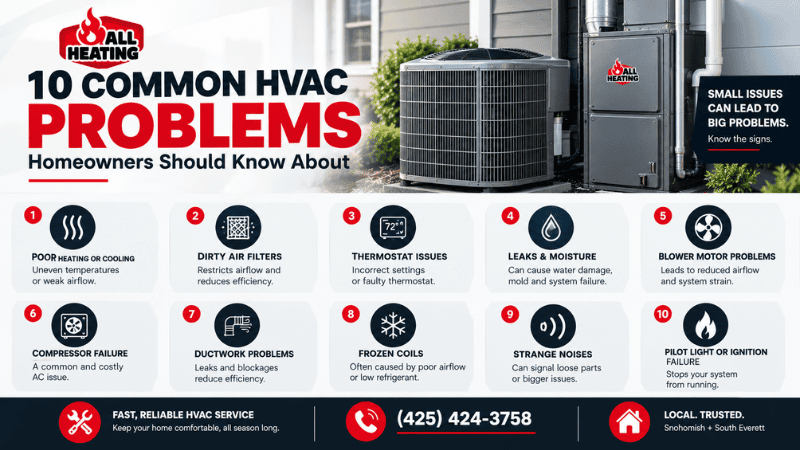
Common HVAC problems include furnaces blowing cold air, short cycling, air conditioners blowing warm air, poor cooling, and heat pumps blowing cold air or developing ice. Some issues, such as an incorrect thermostat setting or a dirty filter, can be safely checked by homeowners. Problems involving electrical components, refrigerant, gas, ignition systems, or repeated system failures should be handled by a qualified HVAC professional. Understanding the warning signs can help you troubleshoot simple issues and know when professional HVAC repair is needed.
Your HVAC system works hard throughout the year. During winter, your heating equipment keeps your home comfortable, while your air conditioner or heat pump handles the warmer months.
Because HVAC systems contain many moving, electrical, and mechanical components, problems can develop over time.
The good news is that not every issue means your system needs a major repair. Sometimes the cause is something simple, such as an incorrect thermostat setting or restricted airflow.
This guide covers 10 common HVAC problems, what may cause them, what you can safely check, and when it’s better to call an HVAC professional.
Common Heating and Furnace Problems
Heating problems can become especially noticeable when temperatures drop. A furnace that isn’t operating correctly may struggle to maintain the temperature you set on your thermostat.
Two common furnace problems are blowing cold air and short cycling.
Furnace Blowing Cold Air
A furnace that runs but produces cold air can have several possible causes.
Before calling for service, check whether:
- The thermostat is set to Heat.
- The thermostat temperature is higher than the room temperature.
- The furnace filter is heavily clogged.
- The system has power.
- The supply vents are open.
If the furnace starts normally but continues blowing cold air, there may be a problem with the ignition system, flame sensor, blower operation, or another internal component.
Don’t attempt to repair gas or electrical components yourself.
What to Check First
| Check | What to Look For |
| Thermostat | Heat mode and correct temperature |
| Air filter | Excessive dirt or blockage |
| Circuit breaker | Tripped HVAC breaker |
| Vents | Open and unobstructed |
| Furnace operation | Error codes or unusual behavior |
If these basic checks don’t solve the problem, professional HVAC troubleshooting can identify the underlying cause.
Furnace Short Cycling
Short cycling occurs when a furnace turns on and off repeatedly without completing a normal heating cycle.
You may notice that the furnace:
- Starts frequently
- Runs for only a few minutes
- Shuts off before reaching the thermostat setting
- Restarts shortly afterward
Several problems can cause short cycling, including restricted airflow, thermostat issues, overheating, or equipment that isn’t properly matched to the home.
A dirty filter is one thing you can safely check. If replacing the filter doesn’t resolve the problem, have the system inspected.
Repeated short cycling can put unnecessary stress on HVAC components, so it’s better to investigate the issue rather than allowing it to continue.
Common AC and Cooling Problems
Air conditioning problems are often most noticeable when outdoor temperatures rise. An AC system may run continuously but still fail to provide enough cooling.
AC Blowing Warm Air
If your air conditioner is blowing warm air, start with the simple checks.
Make sure:
- The thermostat is set to Cool.
- The temperature setting is below the current indoor temperature.
- The indoor unit has power.
- The air filter isn’t heavily clogged.
- The outdoor condenser is operating.
If the system is running but warm air continues coming from the vents, the issue could involve airflow, refrigerant, the compressor, electrical components, or another part of the cooling system.
Refrigerant-related work should always be handled by a qualified professional.
AC Not Cooling the House
Sometimes an air conditioner runs but doesn’t cool the entire home effectively.
This may happen because of:
- Restricted airflow
- Dirty filters
- Blocked vents
- Ductwork problems
- Thermostat issues
- Outdoor unit problems
- Refrigerant-related issues
- An aging or undersized system
Start with the thermostat and filter. Also make sure supply vents are open and not blocked by furniture.
If some rooms remain warm while others cool normally, the issue may involve airflow distribution or ductwork rather than the AC unit itself.
AC Troubleshooting Checklist
| Symptom | Possible Cause | Safe First Check |
| Warm air from vents | Thermostat or cooling-system issue | Check thermostat |
| Weak airflow | Dirty filter or airflow restriction | Inspect filter |
| AC runs continuously | Insufficient cooling or airflow | Check filter and vents |
| One room stays warm | Air distribution problem | Check room vent |
| Outdoor unit isn’t running | Power or equipment issue | Check thermostat and breaker |
Common Heat Pump Problems
Heat pumps provide both heating and cooling, which means they operate differently from a traditional furnace or standard AC system.
Because they work throughout multiple seasons, homeowners may encounter problems related to airflow, controls, outdoor components, or the heat pump’s defrost operation.
Heat Pump Blowing Cold Air
A heat pump can sometimes produce air that feels cooler than the air produced by a furnace.
This is because heat pumps typically deliver heat at a lower temperature than combustion-based heating systems.
However, if your home isn’t warming properly, check:
- Thermostat settings
- Air filter condition
- Outdoor unit airflow
- System operating mode
Heat pumps also periodically enter a defrost cycle during cold weather. During this process, the system may temporarily change operation to remove frost from the outdoor coil.
If the system continues blowing cold air or fails to maintain the desired indoor temperature, professional troubleshooting may be necessary.
Heat Pump Freezing or Icing Up
Some frost on an outdoor heat pump during cold weather can be normal.
The system’s defrost cycle is designed to remove this buildup.
However, heavy or persistent ice accumulation can indicate a problem.
Potential causes include:
- Restricted airflow
- Defrost control problems
- Outdoor fan issues
- Refrigerant-related problems
- Dirty coils
Do not use sharp objects or tools to remove ice from the equipment. Doing so could damage sensitive components.
If the unit remains heavily iced over, turn to a qualified HVAC professional for diagnosis.
When Should You Call an HVAC Professional?
Knowing the difference between a simple check and a repair can prevent unnecessary risks.
Homeowners can safely perform certain basic inspections, but HVAC equipment contains components that require professional training.
Problems You Can Safely Check Yourself
Some basic HVAC troubleshooting steps are reasonable for homeowners.
You can generally:
- Check thermostat settings.
- Replace a dirty air filter.
- Make sure vents aren’t blocked.
- Check whether the HVAC breaker has tripped.
- Make sure outdoor equipment isn’t surrounded by debris.
- Look for obvious signs of water leaks.
If a simple adjustment fixes the issue, continue monitoring your system.
However, don’t repeatedly reset a breaker if it keeps tripping.
HVAC Issues That Require Professional Repair
Contact an HVAC professional when you encounter problems involving:
- Electrical components
- Refrigerant
- Gas lines
- Ignition systems
- Compressor problems
- Blower motors
- Repeated system shutdowns
- Persistent ice buildup
- Unusual burning smells
- Major water leaks
- Strange mechanical noises
If you smell gas, see smoke, or suspect carbon monoxide, don’t attempt to troubleshoot the equipment. Leave the area if necessary and contact the appropriate emergency service or utility provider.
DIY vs Professional HVAC Troubleshooting
| Problem | Homeowner Check | Professional Needed |
| Incorrect thermostat setting | ✓ | |
| Dirty filter | ✓ | |
| Blocked vent | ✓ | |
| Tripped breaker | ✓ | |
| Refrigerant issue | ✓ | |
| Electrical fault | ✓ | |
| Ignition failure | ✓ | |
| Compressor problem | ✓ | |
| Gas-related issue | ✓ | |
| Persistent heat pump icing | ✓ |
How to Recognize a Developing HVAC Problem
Not every HVAC failure happens suddenly. Many systems provide warning signs before a major breakdown.
Pay attention if you notice:
- Increasingly long heating or cooling cycles
- New or unusual sounds
- Repeated thermostat adjustments
- Uneven temperatures
- Unexpected increases in energy use
- Weak airflow
- Frequent system resets
- Water around HVAC equipment
Keeping track of these changes can help your technician diagnose the problem more efficiently.
The U.S. Department of Energy’s Energy Saver guidance recommends regular heating and cooling system maintenance to help maintain equipment performance and efficiency.
FAQs
What are the most common HVAC problems?
Some of the most common HVAC problems include furnaces blowing cold air, furnace short cycling, AC systems blowing warm air, poor cooling, heat pumps blowing cold air, restricted airflow, thermostat problems, and frozen outdoor heat pump components.
Why is my furnace blowing cold air?
A furnace may blow cold air because of an incorrect thermostat setting, restricted airflow, ignition problems, or another internal fault. Check the thermostat and filter first. If the issue continues, have the furnace professionally inspected.
Why is my AC running but not cooling?
An AC can run without providing enough cooling because of restricted airflow, dirty filters, blocked vents, ductwork problems, or equipment-related issues. Refrigerant and compressor problems also require professional diagnosis.
Why is my heat pump not heating?
Check that the thermostat is set correctly, the filter is clean, and the outdoor unit has adequate airflow. If the system still doesn’t heat properly, a professional should inspect the equipment.
What HVAC problems can homeowners troubleshoot?
Homeowners can safely check thermostat settings, replace filters, make sure vents are open, inspect the HVAC breaker, and clear debris around outdoor equipment. More complex mechanical, electrical, gas, and refrigerant problems require professional service.
When should I call an HVAC technician?
Call an HVAC technician when basic troubleshooting doesn’t solve the problem, the system repeatedly shuts down, you notice unusual noises or odors, there is persistent ice buildup, or you suspect an electrical, refrigerant, gas, or mechanical problem.
Know the Warning Signs Before a Small HVAC Problem Becomes a Major Repair
Understanding common HVAC problems makes it easier to recognize when your heating or cooling system isn’t operating normally. Simple checks such as reviewing thermostat settings, replacing filters, and keeping vents clear can resolve some minor issues.
However, persistent problems should not be ignored. Professional HVAC repair can identify the actual cause and prevent you from replacing parts unnecessarily or attempting repairs that could be unsafe.
If your furnace, AC, or heat pump isn’t performing properly, All Heating Services can help diagnose the problem and recommend the appropriate repair. Contact us to schedule professional HVAC service and get your system back to reliable operation.
