How Often Should HVAC Systems Be Serviced?
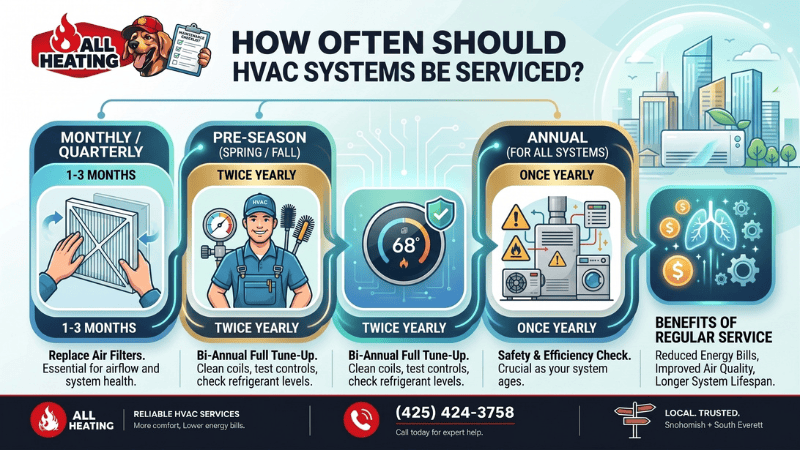
Most homeowners should have their HVAC system professionally inspected and maintained at least once a year, while homes with separate heating and cooling equipment may benefit from servicing each system before its main operating season. A furnace is typically checked before winter, while an AC system is checked before summer. Regular maintenance can identify worn components, airflow problems, electrical issues, and other concerns before they turn into larger repairs. The exact HVAC maintenance schedule should also consider the equipment type, age, usage, and manufacturer’s recommendations.
Your HVAC system doesn’t get much of a break throughout the year.
A furnace may run frequently during winter, while an air conditioner can operate for long periods during summer. Heat pumps can work during both seasons, making consistent maintenance even more important.
This raises a common homeowner question: how often should HVAC be serviced?
The answer isn’t exactly the same for every home. The ideal service frequency depends on the type of system you have, how heavily you use it, its age, and its operating condition.
Still, having a regular maintenance routine is one of the simplest ways to stay ahead of HVAC problems.
How Often Should You Service Your HVAC System?
For most homes, professional HVAC maintenance should be scheduled at least once a year.
If you have separate heating and cooling systems, servicing each before its primary season can be a practical approach.
For example:
- Furnace: Service before winter.
- AC: Service before summer.
- Heat pump: Consider maintenance before the heating and cooling seasons because it operates year-round.
Your equipment manufacturer’s maintenance recommendations should also be followed.
Recommended Heating System Maintenance
A furnace should ideally be inspected before you depend on it heavily during winter.
Pre-season furnace maintenance gives a technician an opportunity to identify potential problems before the system is working at maximum demand.
A heating inspection may involve checking:
- Furnace operation
- Thermostat controls
- Electrical connections
- Safety controls
- Burner operation
- Blower components
- Airflow
- Combustion-related components
The exact work depends on your furnace type and manufacturer.
If your furnace is older, frequently repaired, or showing unusual behavior, more frequent professional attention may be appropriate.
Recommended AC Maintenance
Air conditioners should generally be checked before the cooling season begins.
A pre-summer inspection can help identify problems before the system is needed for extended periods.
During AC maintenance, a technician may inspect:
- Cooling performance
- Electrical components
- Airflow
- Condensate drainage
- Outdoor equipment
- Coils
- System controls
Homeowners should also keep the outdoor unit free from excessive debris and make sure indoor filters are maintained according to the equipment’s requirements.
Simple HVAC Service Schedule
| System | Practical Maintenance Timing |
| Furnace | Before the heating season |
| Central AC | Before the cooling season |
| Heat pump | Before major heating/cooling periods |
| Air filter | Check regularly and replace as needed |
| Older HVAC equipment | May require more frequent evaluation |
There isn’t a universal schedule that applies to every HVAC system. Equipment age, usage, manufacturer requirements, and system condition all matter.
What Is Included in an HVAC Tune-Up?
An HVAC tune-up isn’t simply a quick visual inspection.
Professional maintenance involves checking whether the system is operating correctly and identifying conditions that could affect performance or reliability.
HVAC System Inspection
The inspection depends on the type of HVAC equipment.
For example, a furnace inspection may focus on heating components and safety controls, while AC maintenance focuses more heavily on cooling components and condensate management.
A technician may evaluate:
- System controls
- Electrical connections
- Motors and moving components
- Thermostat operation
- Airflow
- Safety controls
- Equipment condition
- Signs of unusual wear
For heat pumps, the inspection may cover both heating and cooling operation.
Why the Inspection Matters
A system can continue running even when a component is beginning to wear out.
Finding the issue during scheduled maintenance gives you the opportunity to decide how to address it before it becomes an unexpected breakdown.
Cleaning and Performance Checks
Maintenance may also involve cleaning appropriate components and checking system performance.
Depending on the equipment, this can include:
- Removing accessible dirt and debris
- Checking airflow
- Inspecting coils
- Checking condensate drainage
- Testing system operation
- Evaluating temperature performance
- Inspecting components for visible wear
Not every HVAC system requires the exact same service.
A good maintenance visit should be based on the equipment installed in your home rather than a generic checklist.
Benefits of Regular HVAC Maintenance
Regular service isn’t just about keeping a calendar appointment.
It gives homeowners a chance to identify developing problems and keep track of how their equipment is performing over time.
Better Energy Efficiency
An HVAC system that isn’t operating correctly may not perform as efficiently as it should.
Restricted airflow, dirty components, malfunctioning controls, or other problems can affect system performance.
Routine maintenance allows these issues to be identified and addressed.
However, maintenance doesn’t guarantee a specific reduction in your energy bill.
Your heating and cooling costs are also affected by:
- Outdoor temperatures
- Thermostat settings
- Home insulation
- Windows
- Equipment age
- Energy prices
- Home size
- System usage
The U.S. Department of Energy recommends regular maintenance as part of keeping heating and cooling equipment operating effectively.
Fewer Unexpected Repairs
No maintenance plan can prevent every HVAC breakdown.
However, regular inspections can uncover worn or problematic components before they fail completely.
For example, a technician may identify:
- Unusual component wear
- Poor electrical connections
- Airflow problems
- Drainage issues
- Control problems
- Abnormal system operation
You can then decide whether the issue needs immediate attention or can be planned for later.
This is especially useful for older HVAC equipment.
What Happens If You Skip HVAC Maintenance?
Skipping one service appointment doesn’t automatically mean your system will fail.
However, consistently ignoring maintenance can make it easier for small problems to go unnoticed.
Over time, this may contribute to reduced performance or unexpected repairs.
Increased Wear and Tear
Your HVAC system contains components that operate repeatedly throughout the year.
When parts become dirty, worn, or improperly adjusted, other components may have to work harder.
This can contribute to additional wear.
For older equipment, the impact can be more noticeable because components may already be approaching the later part of their useful service life.
Regular inspections provide an opportunity to monitor that condition.
Higher Energy and Repair Costs
A system that isn’t performing properly may consume more energy than necessary.
For example, airflow restrictions can make it harder for conditioned air to move throughout the home.
A small mechanical problem can also become more expensive if it isn’t identified until another component is affected.
This doesn’t mean every repair can be prevented through maintenance.
Instead, the goal is to identify problems earlier and maintain the system according to its needs.
How Often Should HVAC Be Serviced Based on System Age?
System age is another factor worth considering when developing an HVAC service frequency.
| System Condition | Maintenance Approach |
| New system | Follow manufacturer recommendations |
| Regularly used system | At least annual professional inspection |
| Heating and cooling equipment | Consider seasonal service |
| Older system | Monitor more closely |
| Frequently repaired system | Professional evaluation may be needed more often |
| Heat pump | Regular service for year-round operation |
An older system doesn’t automatically need replacement.
However, frequent repairs, declining performance, and increasing operating costs are reasons to have the equipment professionally evaluated.
DIY Maintenance vs Professional HVAC Service
Homeowners can handle several basic maintenance tasks between professional visits.
Homeowners Can Usually:
- Check the air filter.
- Replace the filter when needed.
- Keep supply vents clear.
- Keep return registers unobstructed.
- Keep outdoor equipment free from surrounding debris.
- Monitor unusual noises or odors.
- Check thermostat operation.
Professional HVAC Service Should Handle:
- Electrical component inspection
- Refrigerant-related work
- Gas and combustion components
- Internal mechanical repairs
- Detailed system testing
- Safety-control testing
- Complex airflow diagnosis
If you’re unsure whether a task is safe, it’s better to have a qualified HVAC professional handle it.
Building a Practical HVAC Maintenance Schedule
A simple yearly routine can make it easier to stay on top of service.
Before Winter
- Schedule furnace maintenance.
- Check your thermostat.
- Inspect the air filter.
- Make sure vents aren’t blocked.
- Pay attention to unusual furnace sounds or odors.
Before Summer
- Schedule AC maintenance.
- Check the air filter.
- Make sure the outdoor unit is clear.
- Check that vents are open.
- Look for signs of drainage problems.
Throughout the Year
- Monitor system performance.
- Replace filters as needed.
- Watch for unusual noises.
- Pay attention to uneven temperatures.
- Record repairs and maintenance.
This approach creates a simple HVAC maintenance schedule without making home maintenance complicated.
FAQs
How often should an HVAC system be serviced?
Most homeowners should have their HVAC equipment professionally inspected at least once a year. Separate heating and cooling systems may benefit from service before their primary operating seasons.
How often should a furnace be tuned up?
A furnace is generally best inspected before the heating season. Older systems or equipment with recurring problems may require additional attention based on a professional’s recommendation.
How often should an AC unit be serviced?
An AC system should generally be inspected before the cooling season begins. Regular service can help identify airflow, electrical, drainage, and performance issues.
What does HVAC maintenance include?
HVAC maintenance varies by equipment type but may include system inspection, cleaning appropriate components, checking airflow, testing controls, inspecting electrical connections, and evaluating overall system performance.
Is annual HVAC maintenance really necessary?
Annual professional maintenance is a practical way to monitor HVAC equipment and identify developing issues. It is especially useful for systems that operate heavily or have reached an older stage of service.
Can HVAC maintenance lower energy bills?
Maintenance can help a system operate as intended, particularly when problems such as restricted airflow or component issues are identified. However, actual energy savings depend on the equipment, home efficiency, weather, thermostat settings, and energy rates.
Stay Ahead of HVAC Problems With a Consistent Service Routine
Knowing how often to service HVAC equipment makes maintenance much easier to manage.
For many homeowners, an annual inspection is a good baseline. Homes with separate furnaces and AC systems can benefit from scheduling maintenance before their respective heating and cooling seasons, while heat pumps deserve attention because they may operate throughout the year.
Regular maintenance won’t eliminate every HVAC problem, but it can help you understand your system’s condition, identify developing issues, and keep important components operating as intended.
If your furnace, AC, or heat pump is due for service, All Heating Services can inspect your system and help you establish a practical maintenance routine. Contact us to schedule professional HVAC maintenance and keep your system prepared for the season ahead.
