10 HVAC Maintenance Tips Every Homeowner Should Know
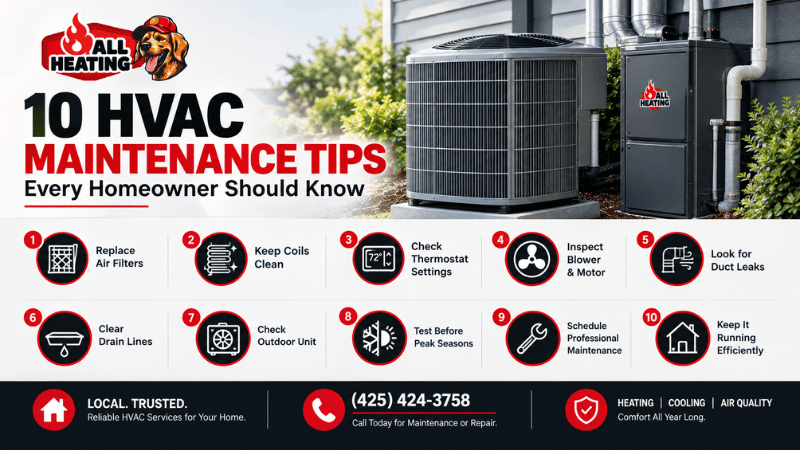
Regular HVAC maintenance helps keep your heating and cooling system reliable, efficient, and ready for seasonal demand. Homeowners can handle simple tasks such as changing air filters, cleaning vents, keeping the outdoor unit clear, and watching for unusual sounds or odors. Professional maintenance is also important because a technician can inspect electrical connections, refrigerant components, safety controls, airflow, and other parts that homeowners cannot safely evaluate themselves. A simple HVAC maintenance checklist used throughout the year can help catch small problems before they become expensive repairs.
Your HVAC system works throughout the year to keep your home comfortable. During winter, it may run for hours to maintain a warm indoor temperature. In summer, the air conditioner has to remove heat and humidity while keeping the home cool.
Because of this regular use, your heating and cooling equipment needs consistent care.
The good news is that home HVAC maintenance doesn’t always require complicated work. Several basic tasks can be handled by homeowners, while more technical inspections should be left to a qualified HVAC professional.
This guide covers 10 practical HVAC maintenance tips that can help you take better care of your system throughout the year.
Essential HVAC Maintenance Tips
Some of the most useful maintenance tasks are also the simplest. Taking a few minutes to check your HVAC system regularly can help maintain airflow and identify problems before they become major issues.
1. Change Your Air Filter Regularly
Your HVAC filter catches dust, dirt, and other airborne particles before they move through the system.
When the filter becomes heavily loaded with debris, airflow can become restricted. Your system may then need to work harder to move conditioned air throughout your home.
Check your filter regularly and replace it according to the manufacturer’s recommendations.
Homes with pets, renovations, or higher levels of dust may require more frequent filter changes.
A good rule is to check the filter monthly rather than waiting until you notice a problem.
Why Filter Changes Matter
| Condition | Possible Result |
| Clean filter | Better airflow |
| Partially clogged filter | Reduced airflow |
| Heavily clogged filter | Increased system strain |
| Incorrect filter size | Poor filtration or airflow problems |
Always use a filter that is compatible with your HVAC equipment. A filter that is too restrictive for your particular system can create airflow problems.
2. Keep Vents and Registers Clean
Supply vents and return registers play an important role in moving air through your home.
Furniture, rugs, curtains, and other household items can accidentally block them.
Check each room and make sure:
- Supply vents are open.
- Return registers are unobstructed.
- Furniture isn’t covering vents.
- Dust isn’t heavily accumulated around the grilles.
- Air can circulate freely.
Vacuuming around vents and registers can also reduce visible dust buildup.
This simple part of HVAC system care can help your system distribute conditioned air more effectively.
Furnace and Heating Maintenance Tips
Your furnace has a demanding job during the heating season. Taking care of it before temperatures drop can help you avoid unexpected problems when you need heat the most.
3. Inspect Your Furnace Before Winter
Don’t wait for the first freezing night to find out that your furnace isn’t operating correctly.
Schedule a basic inspection before the heating season begins.
Homeowners can safely check for visible issues such as:
- Excessive dust around the equipment
- Blocked vents
- Dirty filters
- Objects stored too close to the furnace
- Unusual signs of wear
A professional inspection goes further by checking components that aren’t suitable for DIY work.
According to the U.S. Department of Energy’s home heating guidance, regular maintenance can help heating equipment operate more effectively and efficiently.
Professional furnace maintenance may include checking electrical connections, controls, burners, airflow, and other operating components.
4. Check for Unusual Sounds or Odors
Your furnace may make some normal operating sounds, but a sudden change shouldn’t be ignored.
Pay attention to noises such as:
- Grinding
- Screeching
- Repeated clicking
- Loud banging
- Persistent rattling
Unusual odors can also provide an early warning.
A brief dusty smell when the furnace starts for the first time after a long period of inactivity can be normal. However, persistent burning, electrical, or fuel-related odors should be investigated promptly.
If you smell gas or suspect a carbon monoxide problem, don’t attempt to diagnose the furnace yourself. Leave the area if necessary and contact the appropriate emergency service or utility provider.
5. Keep the Area Around the Furnace Clear
Storage items should not be placed directly around heating equipment.
Keep the furnace area free from:
- Cardboard
- Cleaning chemicals
- Paper products
- Clothing
- Boxes
- Other combustible materials
Keeping the area clear also gives technicians easier access when professional maintenance is needed.
Your furnace manufacturer’s installation and safety instructions should always take priority when determining clearance requirements.
6. Check Your Thermostat Before the Heating Season
Your thermostat controls when your heating system operates, so it’s worth testing before you need it.
Set the thermostat to heat and increase the temperature slightly above the current indoor temperature.
Then check whether the system starts normally.
If your thermostat uses batteries, replace them if the display is dim, blank, or showing a low-battery warning.
For programmable thermostats, review your schedule before winter so the system isn’t following an outdated temperature setting.
AC and Cooling Maintenance Tips
Heating isn’t the only part of your HVAC system that needs attention. Your air conditioner also benefits from basic maintenance before summer arrives.
7. Keep the Outdoor Unit Clear
The outdoor condenser needs adequate airflow to release heat.
Leaves, grass, weeds, branches, and other debris can accumulate around the unit.
Before cooling season, inspect the area surrounding your outdoor equipment.
Keep plants and objects from crowding the unit and remove loose debris from around it.
Don’t open electrical panels or attempt to clean internal components yourself. Those tasks should be handled by a qualified professional.
8. Check Airflow Before Summer
Weak airflow can make your air conditioner seem less effective even when the equipment is running.
Before summer, check the vents throughout your home.
Look for:
- Weak airflow
- Blocked registers
- Closed vents
- Excessive dust
- Rooms that don’t cool properly
If one area of your home consistently receives much less air than others, the problem could involve ductwork, airflow balancing, the blower, or another HVAC component.
A professional inspection can identify the actual cause rather than simply treating the symptom.
9. Check Your AC for Water or Refrigerant-Related Warning Signs
Your air conditioner produces condensation during normal operation.
A small amount of water from the designated condensate system can be normal. However, unexpected water around the indoor unit or repeated leaks should not be ignored.
Also pay attention to signs such as:
- Ice forming on the indoor coil or refrigerant lines
- Reduced cooling
- Longer cooling cycles
- Unusual noises
- Water around the indoor equipment
Don’t attempt to add refrigerant yourself. Refrigerant service requires appropriate equipment and professional handling.
10. Keep a Simple HVAC Maintenance Record
One of the easiest ways to stay organized is to keep a record of your HVAC maintenance.
Write down:
- Filter replacement dates
- Professional service dates
- Repairs completed
- Parts replaced
- Unusual problems noticed
- Thermostat or system upgrades
This gives you a useful history of your HVAC equipment.
It can also help a technician identify recurring problems and determine whether a repair is becoming a pattern.
When Should You Schedule Professional HVAC Maintenance?
Homeowners can handle several basic maintenance tasks, but HVAC systems contain electrical, mechanical, combustion, and refrigerant components that require professional knowledge.
Professional service should be part of your regular HVAC maintenance routine.
Recommended HVAC Tune-Up Schedule
For many homes, scheduling heating maintenance before the winter season and cooling maintenance before summer is a practical approach.
If your system provides both heating and cooling, your HVAC professional can recommend a schedule based on:
- Equipment age
- System type
- Usage
- Manufacturer recommendations
- Previous repair history
- Local climate
A newer system with few problems may have different maintenance needs than an older system that runs heavily throughout the year.
Seasonal HVAC Maintenance Schedule
| Time of Year | Recommended Task |
| Early spring | Prepare and inspect the cooling system |
| Late spring | Check AC operation and airflow |
| Early fall | Inspect and prepare the heating system |
| During winter | Monitor furnace performance |
| Monthly | Check the HVAC filter |
| Year-round | Watch for unusual sounds, odors, leaks, or performance changes |
Signs Your System Needs Professional Attention
Don’t wait for your HVAC system to completely stop working before calling a technician.
Professional attention may be needed if you notice:
- Frequent cycling
- Weak airflow
- Unusual noises
- Strange odors
- Poor heating or cooling
- Unexpected increases in energy use
- Water leaks
- Ice buildup
- Thermostat problems
- Repeated repairs
These symptoms don’t always mean you need a replacement. A professional diagnosis can determine whether the issue is a simple repair, maintenance problem, or sign of aging equipment.
The ENERGY STAR heating and cooling maintenance guidance also recommends regular professional attention to help maintain system performance.
Homeowner HVAC Maintenance Checklist
Use this simple checklist throughout the year:
| Task | Homeowner Can Do It? | Suggested Timing |
| Check air filter | Yes | Monthly |
| Replace air filter | Yes | As needed |
| Clean around vents | Yes | Every few months |
| Keep outdoor unit clear | Yes | Regularly |
| Test thermostat | Yes | Before each season |
| Check for unusual sounds | Yes | During operation |
| Inspect electrical components | No | Professional service |
| Check refrigerant | No | Professional service |
| Inspect furnace safety components | No | Professional service |
| Complete HVAC tune-up | No | Seasonally/as recommended |
FAQs
What HVAC maintenance should homeowners do regularly?
Homeowners should check and replace HVAC filters, keep vents unobstructed, clean around registers, keep outdoor equipment clear, test the thermostat, and watch for unusual sounds, odors, leaks, or changes in system performance.
How often should HVAC systems be serviced?
A professional HVAC inspection is commonly scheduled at least once a year, although systems that provide both heating and cooling may benefit from seasonal service. Always follow the equipment manufacturer’s recommendations and your technician’s advice.
What should an HVAC maintenance checklist include?
An HVAC maintenance checklist should include filter replacement, airflow checks, thermostat testing, inspection of vents and outdoor equipment, heating and cooling performance checks, and professional inspection of electrical, mechanical, safety, and refrigerant components.
How often should I change my HVAC filter?
Check your filter about once a month and replace it according to the manufacturer’s recommendations. Homes with pets, construction activity, or significant dust may need more frequent replacement.
Does HVAC maintenance extend system life?
Regular HVAC system care can help identify worn components, maintain proper airflow, and prevent minor problems from developing into larger failures. While maintenance cannot prevent every breakdown, it can support reliable operation and potentially extend useful equipment life.
What HVAC maintenance should be done before winter?
Before winter, check or replace the air filter, test the thermostat, make sure vents and registers are unobstructed, look for unusual furnace noises or odors, and schedule professional heating maintenance if it is due.
Keep Your HVAC System Ready for Every Season
Good HVAC maintenance doesn’t have to be complicated. Simple tasks such as changing filters, keeping vents clear, checking your thermostat, and maintaining the area around your outdoor equipment can make a meaningful difference in system performance.
At the same time, professional inspections are important for components that require specialized tools and training.
Following a consistent HVAC maintenance checklist gives you a practical way to care for your system throughout the year, catch warning signs early, and keep your home comfortable through both heating and cooling seasons.
If your HVAC system needs professional maintenance, inspection, or a seasonal HVAC tune up, All Heating Services can help. Contact the team to schedule service and keep your heating and cooling system ready for the season ahead.
