
What Is the Best Heating System for a Washington Home?
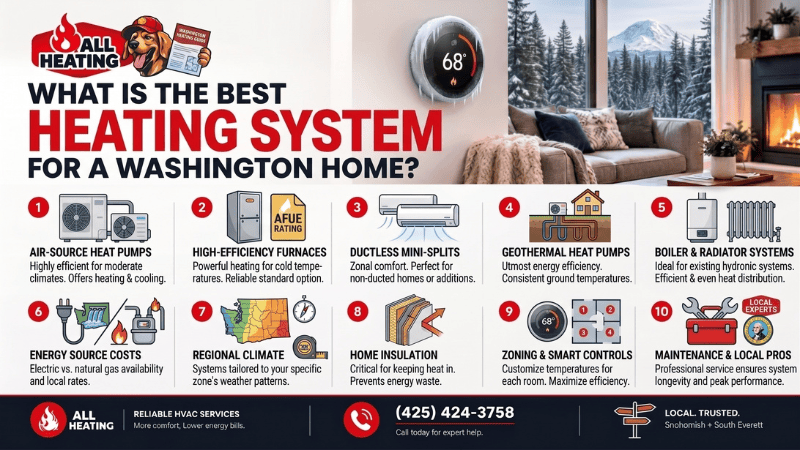
The best heating system for Washington depends on your home’s layout, existing HVAC setup, insulation, comfort preferences, and access to different energy sources. Heat pumps are an attractive option for many Washington homes because they provide both heating and cooling, while furnaces remain a practical choice for homeowners who prefer conventional forced-air heating or already have compatible gas infrastructure. There is no single system that is best for every property, so the right choice should be based on the home’s actual heating needs and installation requirements.
Washington homeowners have several options when it comes to heating their homes.
The right system can depend on where you live, how your home is built, what equipment you already have, and whether you also need cooling during warmer months.
For many homeowners, the decision comes down to comparing a heat pump with a furnace. But there are other factors worth considering before choosing one.
A heating system should not only provide enough warmth. It should also work well with your home’s existing infrastructure, fit your budget, and provide the type of comfort you expect.
This guide compares common heating systems in Washington and explains what to consider before investing in a new system.
What Heating Systems Are Available for Washington Homes?
Washington homes use several types of heating equipment.
The two most common options homeowners may consider when replacing or upgrading a forced-air system are heat pumps and furnaces.
Heat Pumps
A heat pump transfers heat rather than creating heat through combustion.
During winter, an air-source heat pump extracts available heat from outdoor air and transfers it indoors.
The same system can reverse its operation during warmer weather to provide air conditioning.
This makes a heat pump a two-in-one system for homes that need both heating and cooling.
Modern heat pumps are also designed to operate in colder weather than older generations of the technology.
However, system performance depends on the equipment, outdoor conditions, installation, and home characteristics.
Furnaces
Furnaces generate heat and distribute it throughout the home, usually through ductwork.
Depending on the home and available energy sources, homeowners may have access to:
- Natural gas furnaces
- Propane furnaces
- Electric furnaces
A furnace can be a familiar option for homeowners who already have a forced-air heating system.
If you’re replacing an existing furnace, the current ductwork and electrical or gas infrastructure may also influence how practical a replacement is.
A professional assessment can determine whether your existing setup can support the new equipment.
Heat Pumps vs. Furnaces
When comparing a heat pump vs furnace, don’t focus on one feature alone.
Both systems can heat a home effectively, but they operate differently and have different strengths.
Efficiency and Operating Costs
Heat pumps move heat instead of generating it directly through combustion.
This can make them highly efficient under suitable operating conditions.
Furnaces, on the other hand, generate heat and then distribute it through the home.
Your actual operating cost will depend on several factors, including:
- Equipment efficiency
- Local energy prices
- Outdoor temperatures
- Thermostat settings
- Home insulation
- System condition
- How much heating the home requires
This means there isn’t a universal answer to whether a heat pump or furnace will always cost less to operate.
A system that looks inexpensive based on equipment efficiency may perform differently depending on the home and local energy costs.
Heating and Cooling Capabilities
One major difference between the two systems is cooling.
A heat pump can provide both heating and cooling from the same equipment.
A furnace only provides heating.
If you have a furnace and want central air conditioning, you generally need a separate cooling system.
| Feature | Heat Pump | Furnace |
| Heating | Yes | Yes |
| Cooling | Yes | No |
| Combustion required | No | Depends on furnace type |
| Ducted options | Yes | Yes |
| Suitable for Washington homes | Yes | Yes |
| Heating and cooling in one system | Yes | No |
For homeowners who want a single system to handle both sides of the year, a heat pump can be particularly appealing.
What Should You Consider When Choosing a Heating System?
The best heating system for Washington isn’t determined by the equipment alone.
Your home itself plays a major role in deciding what will work best.
Home Size and Layout
The size of your home matters, but square footage isn’t the only consideration.
A professional HVAC evaluation may also consider:
- Number of floors
- Ceiling height
- Number of rooms
- Window area
- Insulation
- Home orientation
- Air leakage
- Existing ductwork
Two homes with the same square footage can require different heating capacities.
An open-plan home may also distribute heat differently from a home with many separate rooms.
This is why equipment should be properly sized rather than selected simply based on the size of an existing unit.
Existing Ductwork
If your home already has ductwork, its condition should be considered before installing new equipment.
Ducts that are poorly designed, damaged, disconnected, or inadequately insulated can affect system performance.
A new heating system cannot completely overcome major airflow problems.
During a heating system evaluation, a professional may look for:
- Damaged ducts
- Air leaks
- Poorly connected sections
- Restricted airflow
- Inadequate return air
- Improper duct sizing
If the existing ductwork is in good condition, it may make a ducted replacement more straightforward.
If it has significant problems, those issues may need to be addressed as part of the project.
Which Heating System Is Right for Your Home?
There is no universal winner in the furnace vs heat pump comparison.
The better option depends on what you want from your heating system and what your home can support.
When a Heat Pump Makes Sense
A heat pump may make sense if you:
- Want heating and cooling from one system
- Prefer an electric heating option
- Want to reduce reliance on combustion-based heating
- Are replacing both an aging furnace and AC system
- Want modern heating and cooling technology
- Have a home suitable for a properly designed heat pump system
Heat pumps can also be useful for homeowners planning a broader home energy upgrade.
However, the system still needs to be properly sized and installed.
When a Furnace May Be a Better Choice
A furnace may make more sense if you:
- Already have a suitable furnace and duct system
- Prefer conventional forced-air heating
- Have an existing natural gas connection
- Want a familiar heating technology
- Have specific heating requirements that favor a furnace
A furnace can also be a practical replacement when the existing system and infrastructure are already configured around this type of equipment.
That doesn’t automatically make it the best choice, though. If you’re replacing an older system, it’s worth comparing both options before making a decision.
Comparing Washington Home Heating Options
| Homeowner Priority | Option to Consider |
| Heating and cooling from one system | Heat pump |
| Existing gas furnace infrastructure | Furnace |
| Electric heating preference | Heat pump or electric furnace |
| Replacing heating and AC together | Heat pump |
| Conventional forced-air heating | Furnace |
| Reducing combustion-based heating | Heat pump |
| Existing compatible ductwork | Either, depending on system design |
These are general considerations rather than universal recommendations.
A professional evaluation is still important because the home’s condition can change which option makes the most sense.
What About Older Washington Homes?
Older homes can present additional challenges when selecting new heating equipment.
The home’s insulation, windows, ductwork, electrical service, and existing heating infrastructure may all affect the project.
For example, installing a new high-performance system in a home with significant air leakage may not deliver the expected comfort improvement unless the building envelope is addressed as well.
Before replacing an older heating system, consider evaluating:
- Insulation
- Windows
- Air leaks
- Ductwork
- Electrical capacity
- Existing heating equipment
- Thermostat controls
A heating upgrade can sometimes be a good opportunity to address several of these issues together.
How to Choose the Right Heating System
Before making a final decision, ask these questions:
1. Do I need both heating and cooling?
If yes, a heat pump may simplify your equipment setup because it can perform both functions.
2. What energy sources are available?
Your home’s electrical service and existing gas or propane infrastructure can influence your options.
3. Is my existing ductwork in good condition?
If your ducts are damaged or poorly designed, they may need attention regardless of which heating system you choose.
4. How well insulated is my home?
A poorly insulated home can place additional demand on any heating system.
5. What does my current system cost to operate?
Review your previous energy bills and heating patterns before deciding.
6. How old is my current equipment?
If you’re already facing repeated repairs, compare the long-term value of continued repairs with replacement.
FAQs
What is the best heating system for a Washington home?
The best heating system depends on the home’s size, insulation, ductwork, energy sources, climate conditions, and homeowner preferences. Heat pumps and furnaces can both be suitable options for Washington homes.
Are heat pumps good for Washington winters?
Yes. Modern heat pumps can provide heating during Washington winters. The appropriate equipment should be selected based on local conditions and the home’s heating load.
Is a furnace better than a heat pump?
Neither is automatically better. Furnaces provide conventional heating, while heat pumps can provide both heating and cooling. The better option depends on your home, energy costs, existing equipment, and comfort requirements.
What is the most energy-efficient heating system?
Heat pumps can provide highly efficient heating because they transfer heat rather than generating it directly. However, actual performance depends on equipment selection, installation, climate, and how the home is operated.
Should I replace my furnace with a heat pump?
A heat pump may be worth considering when replacing an aging furnace, particularly if you also need air conditioning. Before switching, have a professional evaluate your home’s electrical capacity, ductwork, insulation, and heating requirements.
What heating system is best for an older home?
Older homes can use heat pumps, furnaces, or other heating systems. The best choice depends on the home’s insulation, windows, ductwork, electrical service, and existing equipment. Improving the home’s efficiency may also be important before or alongside a heating system replacement.
Choosing the Right Heating System for Your Washington Home
Choosing the best heating system for Washington isn’t simply about selecting the newest or most efficient equipment.
A good heating system should match your home’s actual heating requirements, existing infrastructure, comfort needs, and long-term plans.
Heat pumps can be an excellent option for homeowners who want combined heating and cooling, while furnaces remain a practical choice for many homes with existing forced-air and fuel infrastructure.
If you’re unsure whether a heat pump or furnace is right for your home, All Heating Services can evaluate your existing system, ductwork, and heating needs. Contact us to discuss your heating system installation options and find a solution suited to your Washington home.
