
What Is a Dual-Fuel HVAC System and How Does It Work?
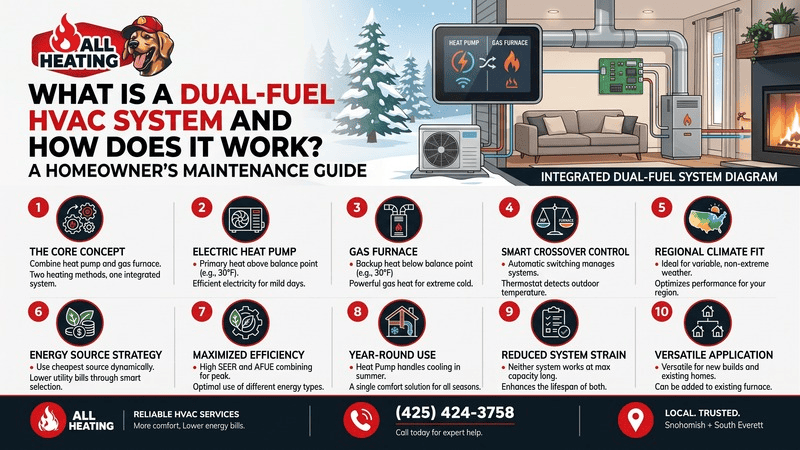
A dual-fuel HVAC system combines an electric heat pump with a furnace to provide two heating options. The heat pump typically handles heating during milder weather, while the furnace takes over when temperatures drop or additional heating capacity is needed. Automatic controls switch between the two sources based on system settings and operating conditions.
A home’s heating needs can change considerably throughout the winter. A heat pump may be well suited to moderate outdoor temperatures, while a furnace can provide additional heating capacity when conditions become colder.
A dual fuel HVAC system combines both technologies in one setup. The heat pump can provide heating and cooling, while the furnace remains available when the system determines that it is the more suitable heating source.
This arrangement can be particularly useful for homeowners who already have a compatible furnace and want to add a heat pump without removing the existing heating equipment.
What Is a Dual-Fuel HVAC System?
A dual-fuel HVAC system combines an electric heat pump with a fuel-burning furnace. Rather than relying on one heating source throughout the season, the system can switch between the two based on operating conditions.
The heat pump generally handles heating during milder weather. When temperatures fall or the home requires more heating capacity, the furnace can take over.
The U.S. Department of Energy describes dual-fuel heating products as systems that can use a heat pump and gas burner depending on factors such as outdoor temperature and heating demand. Department of Energy information on dual-fuel heating provides further technical context.
Heat Pump and Furnace Combination
The two heating sources work differently.
A heat pump transfers heat between the outdoors and indoors rather than producing heat through combustion. During winter, it extracts available heat from outdoor air and transfers it into the home. The process reverses during summer, allowing the same equipment to provide cooling.
A furnace, on the other hand, generates heat by burning a fuel such as natural gas or propane and distributes that heat through the home’s ductwork.
Because both systems can use the same air distribution system, a heat pump and furnace system can provide two heating options without requiring completely separate ductwork.
This arrangement can also be useful when an existing furnace is still in good condition. Instead of replacing the entire system, a homeowner may be able to add a compatible heat pump and create a hybrid setup.
Automatic Heating Source Selection
The homeowner does not normally need to decide which heating source should operate each time the temperature changes.
A thermostat and system controls manage the changeover between the heat pump and furnace. The exact point at which the system switches can depend on outdoor temperature, equipment performance, energy costs, and how the controls have been configured.
Modern control strategies can consider more than just a fixed outdoor temperature. The Department of Energy has examined hybrid systems that use factors such as heat pump efficiency and indoor temperature performance when determining which heating source should operate.
This automatic switching is what makes a hybrid HVAC system different from simply having two separate heaters in the same home.
How Does Dual-Fuel Heating Work?
The basic principle behind dual fuel heating is straightforward. The heat pump handles heating when conditions are suitable, while the furnace provides another heating source when the home needs additional capacity or the system determines that furnace operation is more appropriate.
The changeover point is not universal. Different homes and equipment can have different operating requirements.
Heat Pump Operation
A heat pump moves heat from one location to another. During heating mode, it extracts heat from outdoor air and transfers it indoors.
Because it transfers heat rather than generating it through combustion, a heat pump can provide efficient heating under suitable conditions. It can also reverse its operation to provide cooling during warmer weather.
How effectively it performs depends on factors such as outdoor temperature, equipment type, system sizing, and installation quality.
Proper sizing is especially important. ENERGY STAR’s heat pump guidance recommends using a heating and cooling load calculation to determine the appropriate system size rather than simply selecting equipment based on the home’s floor area.
The heat pump therefore does not simply run until it can no longer produce heat. In a properly configured dual-fuel system, controls determine when another heating source should be used.
Furnace Backup Operation
When outdoor conditions become colder or the home requires more heating capacity, the system can switch to the furnace.
The furnace produces heat through combustion and can provide a strong source of heating during periods of higher demand. Once conditions become more suitable for heat pump operation, the controls can switch back.
This is why the term heat pump backup furnace can sometimes be misleading. The furnace is not necessarily used only when the heat pump fails. In a dual-fuel system, it is a planned part of normal operation.
The goal is to use each heating source under conditions where it makes practical sense rather than forcing either one to handle every situation.
What Are the Benefits of Dual-Fuel HVAC?
A dual fuel HVAC system gives homeowners more flexibility by combining two heating methods. Instead of depending entirely on electricity or fuel combustion, the system can use either source according to operating conditions.
The actual benefits vary between homes, so dual-fuel heating should not automatically be described as cheaper or more efficient in every situation.
Improved Energy Efficiency
One potential advantage is that the heat pump can handle heating during conditions where it operates efficiently, reducing the amount of time the furnace needs to run.
The Department of Energy is also researching optimized controls for hybrid heat pump systems because selecting the appropriate heating source can affect energy consumption, operating costs, and overall system performance. DOE research on hybrid heat pump controls highlights the role of system controls in this process.
However, efficiency depends on more than simply having two heating sources.
Electricity and fuel prices, outdoor temperatures, equipment efficiency, insulation, system sizing, and control settings can all affect operating costs. A system that is efficient in one home or climate may not produce the same results elsewhere.
For homeowners interested in energy efficient heating, proper system design is therefore just as important as the type of equipment selected.
Flexible Heating Options
Flexibility is another important benefit.
During moderate weather, the heat pump can provide heating while also remaining available for cooling during summer. When temperatures become colder, the furnace provides another heating option.
This can be useful for homeowners with an existing furnace that is still in good condition. Instead of immediately replacing the entire HVAC system, they may be able to integrate a compatible heat pump.
The system can also benefit from regular maintenance. Simple tasks such as checking filters and keeping vents unobstructed can help maintain airflow, while professional inspections address components that require specialist equipment or training. Following a regular HVAC maintenance routine can help identify problems before they affect system performance.
Is Dual-Fuel Heating Right for Your Home?
A dual-fuel system can be a practical option, but it is not automatically suitable for every property.
The decision depends on the existing furnace, ductwork, climate, insulation, heating requirements, electricity and fuel costs, and the condition of the current HVAC equipment.
Existing Furnace Compatibility
If your home already has a furnace, it may be possible to add a heat pump and use the furnace as the second heating source.
However, compatibility needs to be checked before installation. The furnace, blower, ductwork, thermostat, electrical system, and heat pump controls all need to work together correctly.
The age and condition of the furnace also matter. If the existing equipment requires frequent repairs or is approaching the end of its service life, keeping it as part of a new system may not be the most practical choice.
The thermostat is another important component because it manages how the two heating sources interact. If you’re replacing or upgrading the control system, reviewing how to set the thermostat can also help ensure the system follows the intended heating schedule.
Climate and Home Heating Needs
Climate has a major influence on whether dual-fuel heating is a practical choice.
In areas with moderate winters, a heat pump may handle much of the heating season. In colder conditions, the furnace may operate more often to meet higher heating demands.
The home’s insulation and air leakage also affect how much heating is required. A poorly insulated home can lose heat quickly, making the HVAC system work harder regardless of its efficiency.
System sizing should be based on the home’s actual heating and cooling requirements. Equipment that is too large or too small can affect comfort, airflow, and overall system performance.
A professional assessment can also determine whether ductwork, airflow, insulation, or other factors should be addressed before installing new equipment.
FAQs
What is a dual-fuel HVAC system?
A dual-fuel HVAC system combines an electric heat pump with a furnace. The heat pump generally provides heating during suitable conditions, while the furnace can take over when temperatures fall or additional heating capacity is needed.
How does a dual-fuel heat pump work?
A dual-fuel heat pump works alongside a furnace. The heat pump transfers heat from outdoor air into the home, while the furnace provides another heating source when the system reaches its configured changeover point.
Is dual-fuel heating more efficient?
It can be, depending on the climate, equipment, energy prices, system sizing, and controls. Using the heat pump during suitable conditions can reduce reliance on the furnace, but actual operating costs vary between homes.
Can a heat pump work with an existing furnace?
Yes. A compatible heat pump can often be paired with an existing furnace. The furnace, blower, ductwork, thermostat, electrical requirements, and controls should be assessed before installation.
Is dual-fuel HVAC worth the cost?
It can be worthwhile when the existing furnace is suitable for integration and the home’s climate and heating needs make a heat pump practical. Installation costs, equipment age, energy prices, and expected system usage should all be considered.
What is the difference between hybrid and dual-fuel heating?
The terms are often used interchangeably. Both generally describe a system that combines a heat pump with another heating source, most commonly a gas furnace. “Dual-fuel” emphasizes the two energy sources, while “hybrid” emphasizes the combination of technologies.
Choosing the Right Heating Setup
A dual fuel HVAC system combines the flexibility of a heat pump with the additional heating capacity of a furnace. The heat pump can handle suitable conditions, while the furnace provides another heating option when temperatures fall or heating demand increases.
Whether this setup makes sense depends on the home’s climate, existing equipment, heating load, and operating costs. A professional assessment can determine whether the existing furnace is compatible with a heat pump and whether the combined system is properly sized.
If you’re considering a heat pump, furnace upgrade, or hybrid HVAC system, All Heating Services can assess your existing setup and help determine a suitable heating option for your home.
