Does HVAC Maintenance Really Save Money?
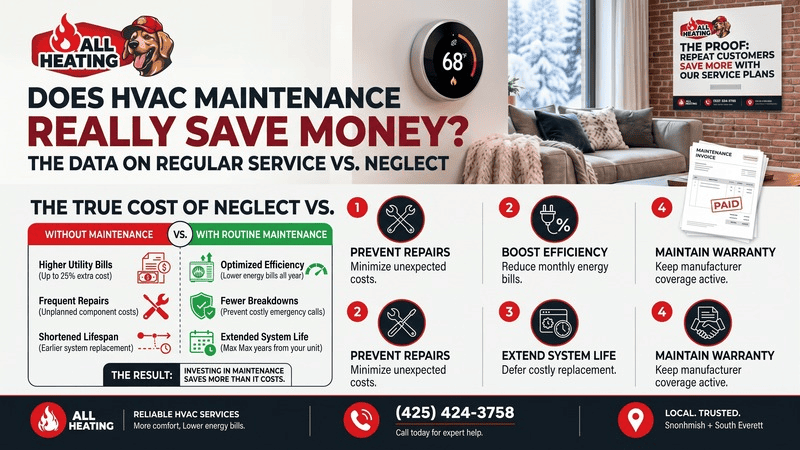
Yes, regular HVAC maintenance can save homeowners money by helping heating and cooling equipment operate efficiently, identifying developing problems early, and reducing unnecessary wear. Maintenance does not guarantee lower energy bills or prevent every repair, but keeping filters, coils, electrical connections, airflow, and other components in proper condition can help reduce avoidable operating and repair costs over time.
HVAC maintenance is easy to postpone.
If your furnace or air conditioner is working normally, it can seem unnecessary to pay for an inspection. Many homeowners wait until the system stops working before calling an HVAC professional.
The problem is that HVAC equipment can develop smaller issues long before a complete breakdown occurs.
A dirty component, restricted airflow, loose connection, or worn part may gradually affect performance. Eventually, the issue can become more expensive to correct.
That raises an important question: does HVAC maintenance save money?
In many cases, preventative maintenance can help control operating and repair costs. However, the savings aren’t guaranteed, and maintenance shouldn’t be viewed as a way to eliminate all future repairs.
Instead, think of it as routine care that helps keep the system operating as intended.
How HVAC Maintenance Can Save Money
Regular maintenance can affect your HVAC costs in several ways.
It can help the equipment operate properly, identify developing issues, and reduce unnecessary stress on components.
Better System Efficiency
An HVAC system needs proper airflow and clean, functional components to operate effectively.
When maintenance is neglected, dust, restricted airflow, worn parts, or other problems can interfere with normal operation.
For example, a heavily loaded filter can restrict airflow. A dirty outdoor coil can interfere with heat transfer. A malfunctioning component can cause the system to operate differently than intended.
A professional HVAC tune-up can identify these conditions and correct appropriate problems before they become larger performance concerns.
Good maintenance doesn’t magically make an old system new, but it can help an existing system perform closer to its intended operating condition.
Fewer Unexpected Repairs
Maintenance can also help identify problems before they result in a complete system failure.
During an inspection, an HVAC professional may find signs of:
- Component wear
- Electrical problems
- Airflow restrictions
- Dirty coils
- Loose connections
- Drainage issues
- Unusual system operation
Finding a problem doesn’t necessarily mean an expensive repair is required immediately.
In some situations, catching a worn or failing component early gives the homeowner an opportunity to address it before it causes additional damage or an inconvenient breakdown.
That’s one of the important HVAC maintenance benefits.
Can Maintenance Reduce Energy Costs?
HVAC equipment uses energy every time it heats or cools your home.
When the system is operating properly, it can perform the job it was designed to do without unnecessary restrictions or faults.
Maintenance may therefore contribute to HVAC energy savings, although the actual amount varies from home to home.
Clean Components and Better Airflow
Airflow is particularly important for HVAC performance.
A system needs to move air through the appropriate supply and return paths.
Maintenance can involve checking conditions such as:
- Air filter condition
- Supply airflow
- Return airflow
- Indoor coil condition
- Outdoor coil condition
- Blower operation
- Ductwork condition
If airflow is restricted, the equipment may have difficulty delivering the expected heating or cooling.
Correcting an airflow problem can help restore normal operation.
However, homeowners shouldn’t assume that every maintenance visit will produce a noticeable reduction in their energy bill.
Energy use is also influenced by:
- Outdoor weather
- Home insulation
- Windows
- Thermostat settings
- Equipment age
- Equipment efficiency
- Home size
- Energy prices
Proper System Operation
An HVAC system contains several components that need to work together.
For example, the thermostat controls operation while motors, fans, coils, controls, and other components perform their respective functions.
During maintenance, a technician can check whether the system is operating normally.
This may include examining electrical connections, measuring operating conditions, checking airflow, and inspecting accessible components.
The goal is simple: identify conditions that could interfere with normal operation.
Can HVAC Maintenance Prevent Expensive Repairs?
Maintenance cannot guarantee that your HVAC system will never break down.
Even a well-maintained system can experience a component failure.
However, preventative HVAC maintenance can help reduce the likelihood of certain avoidable problems and may identify developing issues before they become emergencies.
Finding Small Problems Early
Consider a component that is beginning to wear.
The system may still operate normally, so there may be no obvious reason for a homeowner to call for service.
During a scheduled inspection, a technician may notice unusual wear or operating conditions.
The homeowner can then decide whether to address the issue now or monitor it.
This is generally easier than discovering the problem when the system stops working during a very hot or cold day.
Early diagnosis can also provide more time to compare repair options.
Reducing Component Wear
Poor airflow, dirty components, improper operation, and other conditions can place unnecessary stress on HVAC equipment.
Routine maintenance helps keep the system’s major operating conditions in check.
This doesn’t mean maintenance prevents normal wear.
All mechanical equipment eventually experiences wear.
The purpose is to reduce avoidable stress where possible and identify components that may need attention.
What Does HVAC Maintenance Usually Include?
The exact service depends on the equipment and the company performing the maintenance.
A professional visit may include inspection and testing of areas such as:
| Maintenance Area | What May Be Checked |
| Air filter | Condition and airflow restriction |
| Thermostat | Settings and operation |
| Electrical components | Connections and operating condition |
| Blower | Operation and condition |
| Coils | Dirt and condition |
| Condensate system | Drainage |
| Ductwork | Visible condition and airflow |
| Heating components | Operation and safety |
| Cooling components | Operating performance |
| System controls | Proper operation |
Not every system requires the same maintenance procedure.
A furnace, central AC system, and heat pump have different components and maintenance requirements.
Is Annual HVAC Maintenance Worth It?
For many homeowners, regular maintenance is worth considering because HVAC equipment is a major home system.
However, whether annual service makes financial sense depends on the equipment, age, condition, usage, and manufacturer’s recommendations.
Long-Term Equipment Benefits
Maintenance can help you keep track of the condition of your HVAC system.
This can be particularly useful for older equipment.
Instead of discovering a major problem unexpectedly, regular inspections can give you a better understanding of how the system is performing.
Maintenance can also help identify when replacement planning may make more sense than continuing to repair an aging system.
That can give homeowners more time to compare equipment and installation options rather than making a rushed decision after a breakdown.
Maintenance vs. Repair Costs
It’s useful to think about maintenance as a preventative expense rather than a guarantee of savings.
For example:
Regular maintenance → inspection → early problem detection → timely repair
can sometimes be less disruptive than:
No maintenance → unnoticed problem → breakdown → emergency repair
But there is no guarantee that maintenance will always cost less than repairs.
A newer HVAC system in good condition may have fewer maintenance concerns, while an older system may require more frequent attention.
The best approach is to consider the condition and requirements of your specific equipment.
How Often Should HVAC Maintenance Be Performed?
A common approach is to have HVAC equipment professionally inspected on a regular schedule, often with heating equipment checked before the heating season and cooling equipment checked before the cooling season.
However, the appropriate schedule depends on the system.
A heat pump, for example, operates for both heating and cooling and may benefit from more frequent attention than a system used only for one function.
Always consider:
- Manufacturer recommendations
- Equipment age
- System type
- Usage
- Operating environment
- Previous repair history
Homeowners should also perform simple routine tasks, such as checking the air filter and keeping outdoor equipment clear.
When Maintenance May Not Save You Money
It’s also important to be realistic about what maintenance can and cannot do.
A tune-up won’t make an inefficient old HVAC system perform like a new high-efficiency model.
It also won’t prevent every possible breakdown.
If a furnace is near the end of its useful life and requires repeated major repairs, spending money on maintenance alone may not be the most cost-effective long-term strategy.
Similarly, if your energy bills are high because of poor insulation or significant air leakage, HVAC maintenance won’t solve the entire problem.
Your home’s envelope, HVAC equipment, ductwork, controls, and usage all influence energy consumption.
Simple Ways Homeowners Can Reduce HVAC Costs
Professional maintenance is only one part of HVAC system care.
Homeowners can also take several simple steps between professional visits.
Check Your Air Filter
Inspect the filter regularly and replace it when necessary with the correct type and size.
Keep Vents Clear
Make sure furniture, rugs, curtains, and other objects aren’t blocking supply or return vents.
Keep Outdoor Equipment Clear
Remove leaves, grass, and other visible debris from around the outdoor HVAC unit while avoiding damage to the equipment.
Pay Attention to Changes
Don’t ignore unusual noises, odors, weak airflow, or changes in heating and cooling performance.
Don’t Ignore Small Problems
If your system starts behaving differently, investigate the issue before it becomes a complete failure.
These simple habits can complement professional preventive HVAC maintenance.
FAQs
Does HVAC maintenance really save money?
HVAC maintenance can help save money by supporting proper system operation, identifying developing problems, and reducing unnecessary wear. However, it doesn’t guarantee lower energy bills or prevent every repair.
Can HVAC maintenance lower energy bills?
It can help maintain efficient system operation by addressing issues such as restricted airflow or dirty components. However, energy bills also depend on weather, equipment efficiency, insulation, thermostat settings, home size, and energy rates.
Does annual HVAC maintenance prevent repairs?
Maintenance cannot prevent every repair, but it can help identify certain problems before they become larger failures. Early detection may reduce the risk of unexpected breakdowns and give homeowners more repair options.
How often should HVAC maintenance be performed?
The ideal schedule depends on the equipment type, manufacturer recommendations, age, and usage. Many homeowners have heating and cooling equipment checked regularly, often before the seasons when the equipment will be used most.
Is an HVAC tune-up worth the cost?
For many homeowners, an HVAC tune-up can be worthwhile because it provides an opportunity to inspect equipment, identify developing issues, and maintain proper operation. Its value depends on the age and condition of your system.
Can maintenance extend the life of an HVAC system?
Regular maintenance can help reduce avoidable wear and keep equipment operating properly, which may support a longer service life. However, no maintenance schedule can prevent normal aging or guarantee a specific lifespan.
A Small Maintenance Investment Can Help Avoid Bigger HVAC Costs
So, does HVAC maintenance save money?
It can.
Regular maintenance isn’t a promise of lower bills or zero repairs. Instead, it is a practical way to keep your HVAC equipment in good operating condition, identify problems earlier, and reduce the risk of avoidable performance issues.
The value becomes especially clear when you consider the alternative: waiting until a small problem turns into a major breakdown.
For homeowners, the goal should be simple, maintain what you have, address problems when they appear, and plan ahead when equipment is approaching the end of its service life.
If you need professional HVAC maintenance in the Snohomish or Everett area, All Heating Services can inspect your system, identify potential issues, and help you understand what maintenance or repairs your equipment may need. Contact us to schedule HVAC service and keep your heating and cooling system operating properly.
