
Can a Heat Pump Cool Your Home as Well as an Air Conditioner?
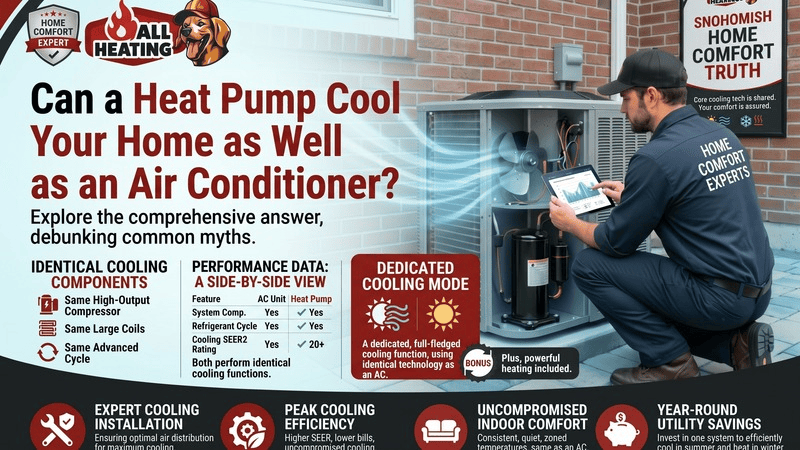
Yes, a heat pump can cool a home much like a conventional air conditioner. In cooling mode, it reverses its heating cycle and moves heat from indoors to the outside. A properly sized heat pump can provide effective summer cooling, temperature control, and efficient operation while also providing heating during colder months.
When choosing a home heating and cooling system, homeowners often compare heat pumps with traditional air conditioners. Since both systems use refrigeration technology to remove heat from indoor spaces, their cooling operation is more similar than it may initially seem.
A heat pump can provide both heating and cooling in one system. That makes it different from a conventional air conditioner, which is designed primarily for cooling. But does that mean a heat pump can cool your home just as effectively?
How Does a Heat Pump Cool a Home?
A heat pump uses the same basic refrigeration principles as an air conditioner. The main difference is that a heat pump can reverse the direction of heat transfer, allowing the same equipment to provide heating in winter and cooling in summer.
Reversing the Heat Transfer Process
During summer, the heat pump operates in cooling mode. A reversing valve changes the direction of refrigerant flow so the system can move heat away from the home.
The indoor coil acts as the evaporator, absorbing heat from the indoor air. The refrigerant carries that heat to the outdoor unit, where it is released outside.
The U.S. Department of Energy explains that heat pumps use a reversing valve to switch between heating and cooling modes. This means the same system can provide both functions rather than requiring separate heating and cooling equipment.
Removing Heat From Indoor Air
The goal of heat pump cooling is not to produce cold air directly. Instead, the system removes heat from the air inside the home.
Indoor air passes over the cold evaporator coil as the blower circulates air through the system. Heat moves from the indoor air into the refrigerant, and the cooled air is then distributed back through the home.
The process also removes some moisture from the air as it cools. This can help maintain a more comfortable indoor environment during warmer weather.
Because the basic cooling cycle is similar to that of an air conditioner, a properly installed heat pump can provide reliable summer cooling.
Is Heat Pump Cooling as Effective as AC?
For many homes, the cooling performance of a heat pump can be comparable to that of a central air conditioner. The difference is less about whether a heat pump can cool effectively and more about how the equipment is selected, sized, installed, and operated.
Cooling Performance
A properly sized heat pump can maintain comfortable indoor temperatures during summer. Its cooling capacity needs to match the home’s actual cooling load rather than simply being selected according to floor area.
Oversized equipment can cycle on and off too frequently, while an undersized system may struggle to maintain the desired temperature during periods of high outdoor heat.
This is one reason professional system sizing matters when comparing heat pump vs AC cooling. The equipment type is only one part of overall performance.
Heat pumps are also available in different configurations, including central ducted systems and ductless systems. The best option depends on the home’s layout, existing ductwork, insulation, and cooling requirements.
Comfort and Temperature Control
A heat pump can provide steady cooling when properly matched to the home. Variable-capacity equipment can adjust its output rather than operating only at full capacity, which may help maintain more consistent indoor temperatures.
Comfort also depends on factors outside the outdoor unit itself. Poor insulation, leaky ductwork, restricted airflow, and an incorrectly configured thermostat can affect how evenly a home cools.
For example, a system may be capable of producing enough cooling but still leave certain rooms warmer because conditioned air is not reaching them effectively.
The home’s existing condition therefore matters when evaluating heat pump vs air conditioner performance. A well-designed system should address cooling capacity, airflow, humidity, and temperature control together.
Heat Pump Cooling Efficiency
Efficiency is another important consideration when comparing a heat pump with a conventional air conditioner. Both systems use electricity to operate a refrigeration cycle, but equipment efficiency varies significantly between models.
Energy Consumption
Heat pump cooling efficiency is commonly represented by ratings such as SEER2, which measures seasonal cooling efficiency.
The U.S. Department of Energy notes that air-source heat pumps can provide both heating and cooling from one system, while their performance is influenced by local climate conditions.
Actual energy consumption depends on more than the equipment rating. Outdoor temperature, thermostat settings, insulation, ductwork, system sizing, maintenance, and how long the system operates each day can all affect electricity use.
A highly efficient heat pump will not necessarily produce low energy bills if the system is poorly sized or the home has significant heat gain.
Variable-Speed Operation
Some modern heat pumps use variable-speed compressors that can adjust their output according to the home’s current cooling demand.
Instead of repeatedly switching between full output and off, a variable-speed system can operate at lower capacity when less cooling is required and increase output when demand rises.
This can help the system maintain more stable temperatures and may improve efficiency during periods of partial load.
Variable-speed technology is also used in other modern HVAC equipment. The Department of Energy identifies variable-speed compressors as a method of providing multiple levels of capacity control in heat pump and air-conditioning systems.
However, variable-speed operation does not automatically make every heat pump more efficient than every air conditioner. Equipment specifications, installation quality, climate, and operating conditions still matter.
Should You Choose a Heat Pump Instead of an AC?
The right choice depends on whether you need cooling only or want one system capable of handling both heating and cooling.
Getting Heating and Cooling in One System
One of the main heat pump benefits is that a single system can provide both functions.
During summer, it operates in cooling mode and transfers heat from indoors to outside. During winter, the refrigeration cycle reverses and transfers available heat from outside into the home.
This can make a heat pump appealing when an existing heating and cooling system is nearing the end of its service life. Instead of installing separate heating and cooling equipment, a homeowner can consider a system designed to handle both.
The same principle applies when replacing an older air conditioner alongside a furnace. A heat pump can potentially provide the home’s summer cooling while also serving as the primary heating system.
For homeowners considering the technology in Western Washington, All Heating’s discussion of heat pumps in Everett’s climate also considers how one system can provide both heating and summer cooling.
When a Separate AC Makes More Sense
A conventional air conditioner may still be the better option for some homes.
If a homeowner only needs cooling and has a relatively new, efficient heating system, replacing the AC with another AC may make more practical and financial sense. There may be little reason to replace a functioning furnace simply to introduce heat pump heating.
Existing infrastructure also matters. The condition of the ductwork, electrical system, indoor air handler, and current heating equipment should be considered before choosing a replacement.
Climate is another factor. In regions with significant heating needs, a heat pump can provide year-round value because its heating capability is part of the system. In a home where heating is already handled efficiently and only cooling equipment needs replacement, the calculation can be different.
The decision should therefore be based on the home’s heating and cooling requirements rather than assuming that one technology is automatically better.
FAQs
Can a heat pump cool a house like an AC?
Yes. A heat pump can cool a house using a refrigeration cycle similar to a conventional air conditioner. In cooling mode, it removes heat from indoor air and releases that heat outside.
Does a heat pump work as well as an air conditioner?
A properly sized and installed heat pump can provide cooling performance comparable to a conventional air conditioner. Actual comfort depends on system capacity, installation quality, airflow, insulation, and indoor heat gain.
Is heat pump cooling energy efficient?
Heat pump cooling can be energy efficient, but performance varies by equipment and operating conditions. Efficiency depends on the system’s rating, size, outdoor temperature, thermostat settings, maintenance, and the home’s overall condition.
Can a heat pump replace both a furnace and AC?
Yes. A heat pump can provide both heating and cooling, potentially replacing a separate furnace and air conditioner. Whether it is suitable depends on the home’s heating load, climate, electrical requirements, and existing HVAC setup.
Is a heat pump good for summer in Washington?
Yes. Heat pumps can provide effective summer cooling in Washington homes. Local climate, home insulation, system sizing, and cooling capacity should still be considered when selecting equipment.
Does a heat pump cool better than central AC?
Not necessarily. Both can provide effective central cooling when correctly sized and installed. A heat pump’s main advantage is that it can also provide heating, while a conventional central AC is designed primarily for cooling.
Choosing the Right Cooling System
A heat pump can cool a home much like a conventional air conditioner while providing an additional heating function. For homeowners replacing both heating and cooling equipment, this two-in-one capability can make a heat pump worth considering.
However, the best choice depends on the home’s existing system, climate, cooling load, ductwork, insulation, equipment condition, and expected energy use. Proper sizing and installation are just as important as the equipment selected.
Regular maintenance also helps keep cooling equipment operating reliably through the summer. Homeowners can review common HVAC problems in older homes when assessing issues such as airflow, insulation, aging equipment, and thermostat performance.
If you’re considering a heat pump or replacing an existing cooling system, All Heating Services can assess your home’s current setup and help determine which heating and cooling option fits your needs.
