Repair or Replace a Furnace in Snohomish?
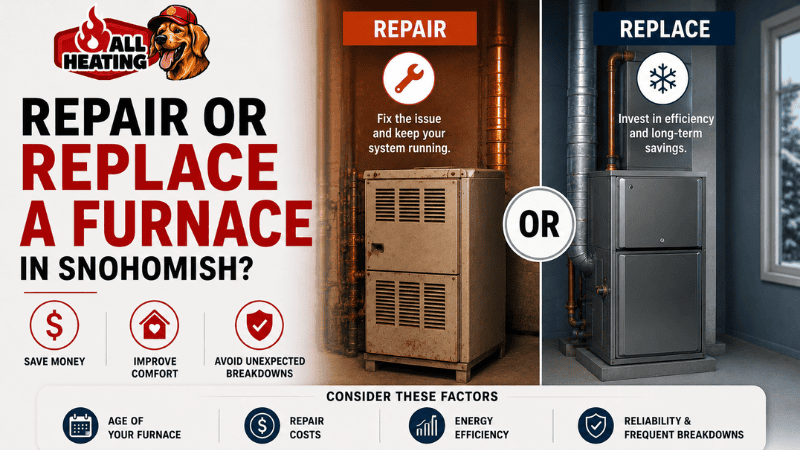
If you’re wondering whether to repair or replace a furnace in Snohomish, the decision depends on the furnace’s age, repair costs, efficiency, and overall condition. Furnaces under 10–15 years old with minor issues can often be repaired, while older systems with frequent breakdowns, rising energy bills, or major component failures are usually better candidates for replacement. A professional inspection can help determine the most cost-effective solution for your home.
A furnace is one of the most important systems in your home, especially during Snohomish’s cold and wet winters. When it starts having problems, many homeowners ask the same question: Should I repair it or replace it?
The answer isn’t always simple. Some furnace problems are inexpensive to fix, while others may signal that your heating system is reaching the end of its useful life. Continuing to repair an aging furnace can eventually cost more than investing in a newer, more efficient model.
This guide explains how to evaluate your furnace, compare repair and replacement costs, and choose the right solution for your Snohomish home.
Signs Your Furnace Can Still Be Repaired
Not every furnace problem means you need a replacement. In many cases, professional repairs can restore reliable performance and extend the life of your heating system.
Here are several situations where furnace repair Snohomish may be the better option.
Minor Mechanical Issues
Many furnace problems involve individual components rather than the entire system.
Examples include:
- Dirty flame sensors
- Faulty igniters
- Worn belts
- Blower motor issues
- Thermostat problems
- Clogged air filters
These repairs are generally straightforward and can often be completed without replacing the furnace.
If the rest of your system is in good condition, repairing these smaller issues is usually the most practical choice.
Affordable Repair Costs
The cost of repairs is another important factor.
If the repair is relatively inexpensive and your furnace has several years of reliable service remaining, repairing it often makes financial sense.
Minor repairs also help avoid the larger upfront expense of replacing the entire heating system.
A qualified technician can explain the repair options and help you understand whether the investment is worthwhile.
Relatively New Equipment
Most furnaces have an average furnace lifespan of 15 to 20 years when properly maintained.
If your furnace is:
- Less than 10 years old
- Regularly maintained
- Operating efficiently
- Experiencing its first major repair, it is usually worth repairing.
Modern furnaces are designed to provide many years of dependable performance, so replacing a newer system is rarely necessary unless significant damage has occurred.
When Furnace Replacement Is the Better Option
While repairs work well for many situations, there comes a point when replacement offers greater value.
Choosing furnace replacement in Snohomish may reduce long-term costs while improving comfort and efficiency.
Frequent Breakdowns
Does your furnace require service every heating season?
Frequent repairs often indicate that multiple components are wearing out at the same time.
Repeated service calls can quickly become expensive and inconvenient.
If your furnace seems to need constant attention, replacement may provide better long-term reliability.
High Energy Bills
Older furnaces lose efficiency as they age.
If you’ve noticed steadily increasing heating costs despite similar winter weather, your furnace may be using more fuel to produce the same amount of heat.
Installing an energy-efficient furnace can significantly improve performance while reducing monthly utility bills.
Higher efficiency also means your system doesn’t have to work as hard to keep your home comfortable.
Furnace Age Over 15–20 Years
Age plays a major role in deciding whether replacement makes sense.
Most furnaces begin experiencing more frequent problems after 15 years of service.
Even if an older furnace still operates, newer systems provide:
- Better efficiency
- Quieter operation
- Improved comfort
- More reliable heating
- Modern safety features
If your furnace is approaching 20 years old, replacing it is often a smarter long-term investment than continuing expensive repairs.
Major Component Failures
Some repairs involve costly components that may not be worth replacing in an older furnace.
Examples include:
- Cracked heat exchanger
- Failed blower motor
- Damaged control board
- Major gas valve problems
When expensive parts fail, investing in a new furnace installation in Everett and Snohomish is often the more economical solution.
A new system also comes with manufacturer warranties that provide additional peace of mind.
Comparing Repair Costs vs Replacement Costs
Cost is one of the biggest factors homeowners consider.
Looking beyond today’s repair bill helps you make the best financial decision over the coming years.
Understanding the 50% Rule
Many HVAC professionals use what’s known as the 50% Rule.
The guideline is simple:
If a repair costs around 50% or more of the price of a new furnace—and the system is already older—it often makes more sense to replace it.
For example:
- Furnace replacement estimate: $8,000
- Major repair estimate: $4,500
In this situation, replacement may provide greater value because you’ll receive:
- New equipment
- Better efficiency
- Manufacturer warranty
- Lower repair risk
- Longer expected lifespan
The 50% Rule isn’t a strict requirement, but it’s a useful guideline when weighing your options.
Long-Term Energy Savings
One of the biggest advantages of replacement is lower operating costs.
Today’s high-efficiency furnaces convert more fuel into usable heat than many older models.
Benefits include:
- Lower monthly heating bills
- Improved indoor comfort
- More consistent temperatures
- Reduced environmental impact
- Fewer repair expenses
Over time, energy savings can help offset the cost of replacing your furnace.
Choosing the Right Furnace Solution for Your Snohomish Home
Every home is different, so there’s no one-size-fits-all answer.
When deciding whether to repair or replace your furnace, consider the following factors:
- Age of the furnace
- Repair history
- Current repair cost
- Overall efficiency
- Monthly utility bills
- Indoor comfort
- Future maintenance needs
A professional HVAC inspection provides valuable information about your system’s condition and remaining service life.
An experienced technician can explain your options without pressure and recommend the solution that best fits your home’s needs and budget.
If replacement is the better choice, selecting the right furnace size and efficiency rating ensures reliable performance for years to come.
Tips to Extend Your Furnace’s Life
Whether you repair or replace your furnace, regular maintenance helps maximize its performance.
Simple maintenance habits include:
- Replace air filters every 1–3 months.
- Schedule annual professional tune-ups.
- Keep supply and return vents clean.
- Don’t block airflow with furniture.
- Listen for unusual sounds.
- Address small problems before they become major repairs.
Routine maintenance helps improve reliability and can extend the life of your heating system.
Frequently Asked Questions
How do I know if I should repair or replace my furnace?
If your furnace is relatively new and has a minor issue, repairing it is often the best option. If it’s over 15 years old, requires frequent repairs, or has major component failures, replacement may provide better long-term value.
What is the 50% rule for furnace replacement?
The 50% Rule suggests replacing your furnace if the repair cost is around half or more of the cost of a new system, especially if the furnace is nearing the end of its expected lifespan.
How long does a furnace typically last?
Most furnaces last between 15 and 20 years with proper maintenance. Regular servicing can help extend the lifespan of your heating system.
Is replacing a furnace worth the investment?
Yes. A new furnace can improve energy efficiency, reduce repair costs, increase comfort, and lower monthly heating bills over time.
What are the warning signs that a furnace should be replaced?
Common signs include frequent breakdowns, rising energy bills, uneven heating, unusual noises, expensive repairs, and a furnace that’s more than 15–20 years old.
Can a new furnace lower my heating bills?
Yes. Installing an energy-efficient furnace often reduces fuel consumption, allowing homeowners to save money on heating costs while improving indoor comfort.
Make the Right Heating Decision for Your Home
Choosing whether to repair or replace a furnace in Snohomish doesn’t have to be difficult. By considering your furnace’s age, repair history, efficiency, and the cost of future maintenance, you can make a decision that protects both your comfort and your budget. While many newer systems can continue operating reliably with affordable repairs, older furnaces that experience frequent breakdowns or rising energy costs are often better candidates for replacement.
If you’re unsure which option is right for your home, schedule a professional furnace evaluation. An experienced HVAC technician, All Heating can inspect your system, explain your options, and recommend the most cost-effective solution. Whether you need a simple repair or a complete furnace replacement, making an informed decision today can help keep your Snohomish home warm, efficient, and comfortable for many winters to come.
