How Can You Lower Your Heating Bill in Winter?
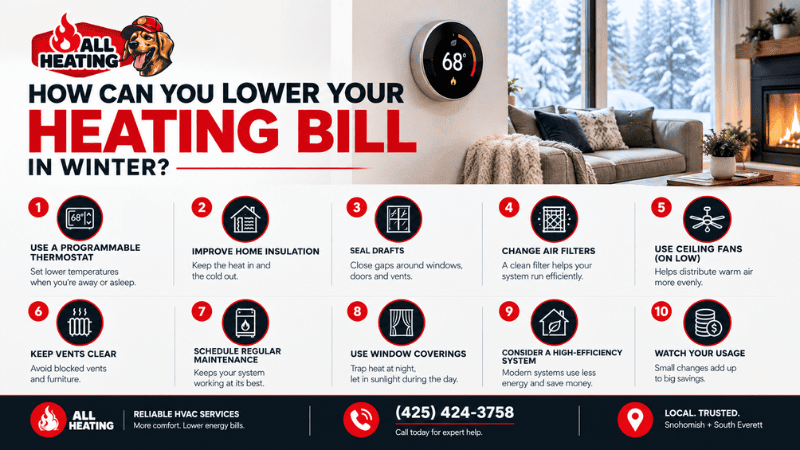
To lower your heating bill in winter, focus on how your home uses and loses heat. Adjust your thermostat, address drafts, maintain your heating equipment, replace dirty filters, and make sure your furnace is operating correctly. If your heating bills remain unusually high despite these steps, an inefficient or aging HVAC system may be contributing to the problem. The U.S. Department of Energy recommends looking at both heating equipment and the home’s overall energy performance when trying to reduce heating costs.
Winter heating bills can be frustrating, especially when your home doesn’t seem much warmer despite higher energy use.
The amount you pay isn’t determined by your furnace alone. Weather, home size, insulation, air leakage, thermostat settings, equipment condition, and energy prices can all affect your monthly bill.
That means there isn’t one solution that works for every home.
Instead, homeowners should look at where energy is being used and where heated air may be escaping. In some cases, a simple change can make a noticeable difference. In others, the problem may require HVAC service or improvements to the home itself.
This guide explains practical ways to reduce winter heating costs without relying on complicated changes.
Why Are Heating Bills Higher in Winter?
Higher winter bills are often a natural result of increased heating demand. Your HVAC system has to work harder when outdoor temperatures are significantly lower than indoor temperatures.
However, unusually high bills can also indicate that your home or heating equipment isn’t operating efficiently.
Increased Heating Demand
During colder weather, your furnace may operate for longer periods to maintain your desired indoor temperature.
The colder it is outside, the more heat your home can lose through:
- Exterior walls
- Windows
- Doors
- Attics
- Floors
- Air leaks
Your heating system then has to replace that lost heat.
This is why comparing one winter month’s bill with a summer bill isn’t always useful. Heating and cooling have completely different energy demands.
Instead, look for changes in your heating usage and compare similar months from previous years when possible.
Poor Home Insulation and Air Leaks
Your furnace can operate perfectly and still leave you with high heating costs if your home loses heat quickly.
Air leaks around windows, doors, and other openings allow warm indoor air to escape and cold outdoor air to enter.
Insufficient insulation can create a similar problem by allowing heat to move through the home’s building envelope.
Common Places to Look for Heat Loss
| Location | What to Look For |
| Exterior doors | Visible gaps or drafts |
| Windows | Loose seals or damaged weatherstripping |
| Attic | Insufficient insulation |
| Basement | Cold floors or exposed gaps |
| Crawl space | Air leakage or poor insulation |
| Utility openings | Gaps around pipes or wiring |
If your furnace seems to run constantly but certain rooms remain cold, investigate the home as well as the HVAC system.
Simple Ways to Reduce Heating Costs
You don’t always need a major home improvement project to start saving money on heating.
Several simple changes can help you use your heating system more effectively.
Adjust Your Thermostat
Your smart thermostat directly affects how much your heating system operates.
If your home is warmer than necessary, your furnace may be using energy to maintain a temperature you don’t actually need.
Consider using a programmable thermostat to create a schedule that matches your daily routine.
For example, you can set the temperature differently when:
- Everyone is asleep
- The house is empty
- The family is home
- You’re preparing for bedtime
The important thing is to choose settings that remain comfortable for your household rather than making constant manual changes.
Replace Dirty HVAC Filters
A dirty filter can restrict airflow and make it harder for your heating system to distribute warm air.
Check your filter regularly during winter.
If it looks heavily covered with dust or debris, replace it with the correct filter for your equipment.
A clean filter can support proper airflow, but don’t assume that installing the highest-rated filter available is always better. Your HVAC system needs a filter that provides appropriate filtration without creating excessive airflow resistance.
Filter Check
| What You See | What to Do |
| Filter looks clean | Continue monitoring |
| Light dust buildup | Check again soon |
| Heavy dust buildup | Replace the filter |
| Filter becomes dirty very quickly | Investigate the cause |
If your filter repeatedly becomes dirty much faster than expected, there may be additional factors worth discussing with an HVAC professional.
How HVAC Maintenance Can Lower Energy Bills
Your heating system contains numerous components that need to work together correctly.
When a component becomes dirty, worn, or improperly adjusted, the system may not perform as efficiently as it should.
Professional maintenance isn’t simply about preventing breakdowns. It can also help identify performance issues that may contribute to unnecessary energy use.
Improve System Efficiency
A professional HVAC inspection can evaluate how your system is operating.
Depending on the equipment, a technician may inspect:
- Electrical connections
- Blower operation
- Safety controls
- Burner operation
- Thermostat performance
- Airflow
- Heat exchanger condition
- Other system-specific components
If a problem is found, correcting it may help the system operate more effectively.
However, maintenance isn’t a guarantee of a lower bill. Your home’s insulation, weather conditions, thermostat settings, equipment age, and energy rates all affect total heating costs.
Prevent Small Problems From Becoming Expensive Repairs
Some HVAC problems begin with subtle changes.
For example, you might notice that:
- The furnace runs longer than usual.
- Certain rooms aren’t getting enough heat.
- The system makes a new noise.
- The thermostat seems less responsive.
- The furnace cycles more frequently.
These changes don’t necessarily mean your system is using dramatically more energy, but they can indicate that something isn’t operating normally.
Addressing problems early can sometimes prevent them from developing into larger repairs.
It also gives you a chance to make an informed decision about whether repairing, maintaining, or replacing the equipment makes the most sense.
When Should You Consider a More Efficient Heating System?
Sometimes the best way to address consistently high heating costs is to evaluate the heating equipment itself.
An older system may still operate, but that doesn’t necessarily mean it’s operating efficiently.
Replacement should not be based solely on age. Consider the system’s condition, repair history, performance, and your home’s heating needs.
Signs Your Existing System Is Inefficient
High heating bills alone don’t prove that your furnace is inefficient.
Look for several signs together, such as:
- Increasing repair frequency
- Longer heating cycles
- Difficulty maintaining the thermostat setting
- Uneven temperatures
- Declining system performance
- Frequent component failures
- Increasing operating costs
- Equipment approaching the end of its expected service life
Before replacing the system, have an HVAC professional determine whether the problem is actually coming from the equipment.
A ductwork issue, insulation problem, thermostat fault, or airflow restriction can sometimes create symptoms that look like furnace inefficiency.
Benefits of High-Efficiency HVAC Equipment
Modern heating equipment can offer improved efficiency compared with older systems, depending on the equipment being replaced and the home’s existing conditions.
Potential benefits include:
- Lower energy consumption
- More consistent heating
- Improved temperature control
- Modern system controls
- Better reliability
- Fewer repairs when replacing severely worn equipment
However, the most efficient equipment isn’t automatically the best choice for every home.
System sizing, HVAC installation quality, ductwork, insulation, and proper setup all matter.
Where Your Heating Money Goes
Understanding the major factors behind your heating bill can help you decide where to focus your efforts.
| Factor | How It Can Affect Heating Costs |
| Outdoor temperature | Colder weather increases heating demand |
| Thermostat setting | Higher indoor temperatures generally require more heating |
| Insulation | Poor insulation can increase heat loss |
| Air leakage | Drafts allow conditioned air to escape |
| HVAC condition | Equipment problems can reduce performance |
| Filter condition | Restricted airflow can affect system operation |
| Home size | Larger spaces generally require more heating |
| Equipment type | Different systems have different operating characteristics |
| Energy prices | Utility rates directly affect your bill |
A Practical Winter Heating Cost Checklist
Before assuming you need a new furnace, work through these steps:
- Check your thermostat settings.
- Inspect your HVAC filter.
- Look for obvious drafts around doors and windows.
- Make sure vents aren’t blocked.
- Check whether certain rooms are consistently colder.
- Review your recent energy usage.
- Look for unusual furnace behavior.
- Schedule professional maintenance if service is due.
- Investigate insulation if the home loses heat quickly.
- Consider equipment replacement only after evaluating the existing system.
This approach helps separate problems caused by the home from problems caused by the HVAC equipment.
FAQs
How can I lower my heating bill in winter?
Start by using sensible thermostat settings, replacing dirty filters, sealing obvious drafts, keeping vents unobstructed, and maintaining your heating system. If bills remain unusually high, have your insulation, ductwork, and HVAC equipment evaluated.
What is the cheapest way to heat a home?
There isn’t one heating method that is cheapest for every home. Operating costs depend on the heating system, local energy prices, outdoor temperatures, home efficiency, insulation, and equipment condition.
Does lowering the thermostat save money?
Generally, reducing the thermostat when you’re asleep or away can reduce the amount of heating your home requires. A programmable thermostat can automate these temperature changes.
Can HVAC maintenance reduce heating costs?
Proper maintenance can help your system operate as intended and identify problems that may affect performance. However, your actual savings will depend on the system’s condition and other factors affecting your home’s heating demand.
Why is my heating bill suddenly so high?
A sudden increase may be related to colder weather, changes in thermostat settings, increased heating use, rising energy prices, poor insulation, air leaks, or an HVAC problem. Comparing your current usage with previous periods can help identify unusual changes.
Should I replace an old furnace to save money?
Not necessarily. Replacement may make sense when an older furnace has declining performance, frequent repairs, or poor efficiency, but an inspection should come first. Sometimes maintenance, ductwork repairs, insulation, or airflow improvements can solve the problem without replacing the furnace.
Make Every Heating Dollar Count This Winter
Learning how to lower your heating bill starts with understanding where your home is losing energy and how your HVAC system is operating. Simple steps such as managing thermostat settings and replacing dirty filters can help, while air sealing, insulation improvements, and professional HVAC service can address larger sources of energy waste.
If your heating costs remain unusually high despite making these changes, don’t automatically assume you need a new furnace. A professional evaluation can determine whether the issue is related to your equipment, airflow, ductwork, insulation, or another part of the home.
If you’re concerned about rising heating costs or your system isn’t performing as expected, All Heating Services can inspect your heating system and identify practical ways to improve its performance. Contact us to schedule professional HVAC service and find the right solution for your home.
