10 Ways to Improve Your Home’s Heating Efficiency This Winter
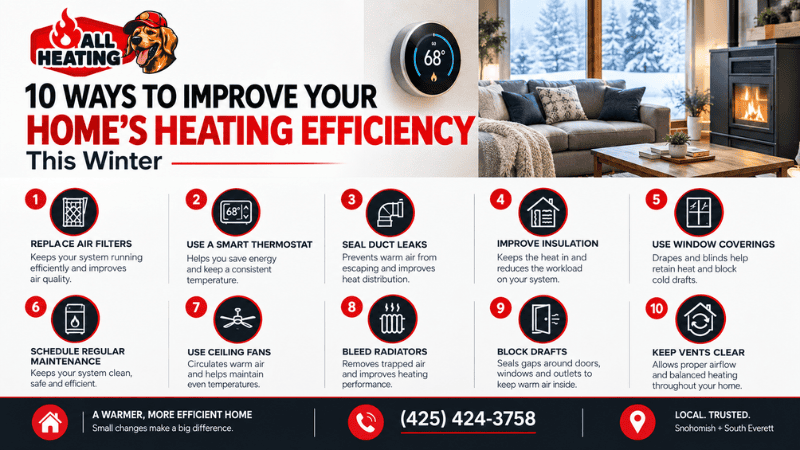
The easiest ways to improve heating efficiency this winter are to use sensible thermostat settings, replace dirty air filters, keep vents open, seal drafts, improve insulation, and schedule professional HVAC maintenance. If your furnace is old, frequently needs repairs, or struggles to heat your home, upgrading to a more efficient system may provide better long-term performance. The U.S. Department of Energy recommends addressing both HVAC performance and home heat loss when looking for ways to use less energy for heating.
Winter heating costs can add up quickly, especially when your furnace has to run frequently to maintain a comfortable indoor temperature.
However, the heating system itself isn’t always the reason energy use is high. Air leaks, poor insulation, blocked vents, dirty filters, and inefficient thermostat settings can all make your furnace work harder.
The good news is that you don’t necessarily need a new heating system to start improving efficiency.
Some changes are simple and inexpensive, while others may require professional HVAC service or home improvements. This guide explains how to improve heating efficiency using practical steps you can take before and during winter.
Simple Ways to Improve Heating Efficiency
Start with the easiest changes. Small adjustments to the way you operate and maintain your heating system can help reduce unnecessary energy use.
Adjust Your Thermostat Settings
Your thermostat determines when your furnace operates and how long it runs.
Keeping your home unnecessarily warm can increase heating demand. Instead, choose a comfortable temperature and avoid making frequent large adjustments.
A programmable or smart thermostat can also help automate your heating schedule.
For example, you can set a lower temperature while everyone is away and have the home warm up before you return.
The U.S. Department of Energy’s Energy Saver thermostat guidance explains that adjusting thermostat settings when you’re asleep or away can help reduce heating and cooling energy use.
Practical Thermostat Tips
- Avoid setting the thermostat higher than necessary.
- Use a consistent schedule.
- Reduce the temperature when you’re sleeping or away.
- Keep the thermostat away from direct sunlight and heat sources.
- Replace thermostat batteries when needed.
- Consider a programmable thermostat if you don’t already have one.
The goal isn’t to keep changing the temperature throughout the day. A predictable schedule is usually easier to manage.
Replace Dirty Air Filters
A dirty HVAC filter can restrict airflow through your heating system.
When airflow is restricted, your furnace may need to operate longer to distribute warm air throughout your home.
Check the filter regularly during winter and replace it when it becomes dirty.
How often you need to replace it depends on factors such as:
- Filter type
- Home size
- Number of occupants
- Pets
- Indoor dust levels
- HVAC usage
Always follow the filter and equipment manufacturer’s recommendations.
Why Airflow Matters
| Filter Condition | Potential Effect |
| Clean | Proper airflow |
| Moderately dirty | Reduced airflow |
| Heavily clogged | Increased system strain |
| Incorrect filter | Possible airflow problems |
Replacing a filter is one of the simplest heating efficiency tips for homeowners.
HVAC Maintenance Tips for Better Efficiency
Your furnace cannot operate efficiently if important components are dirty, worn, or incorrectly adjusted.
Professional maintenance gives you an opportunity to identify these problems before they affect winter performance.
Schedule an Annual HVAC Tune-Up
A professional HVAC tune-up can help verify that your heating system is ready for the winter season.
Depending on your equipment, maintenance may include inspecting:
- Electrical connections
- Safety controls
- Burners
- Blower components
- Airflow
- Thermostat operation
- Combustion-related components
- System controls
The U.S. Department of Energy recommends regular maintenance for heating systems to help maintain efficiency and performance.
An annual inspection can also reveal developing problems that may otherwise result in an unexpected breakdown.
Keep Vents and Registers Clear
Your furnace can produce plenty of heat, but blocked vents can prevent that heat from reaching the room effectively.
Walk through your home and check that furniture, curtains, rugs, and other objects aren’t blocking supply registers.
Also make sure return-air grilles remain unobstructed.
Check These Areas Before Winter
- Living room vents
- Bedroom registers
- Hallway returns
- Basement vents
- Upstairs registers
- Large return-air grilles
Keeping airflow paths clear is a simple part of home HVAC maintenance and can help your system distribute heat more effectively.
Home Improvements That Reduce Heat Loss
Improving furnace efficiency is only part of the solution.
If your home loses heat quickly, your HVAC system has to keep replacing that lost heat.
The U.S. Department of Energy’s Energy Saver guidance on insulation and air sealing identifies insulation and sealing air leaks as important ways to improve a home’s energy performance.
Seal Drafts Around Windows and Doors
Cold air can enter through small gaps around windows and doors.
At the same time, warm indoor air can escape through those openings.
Check for drafts around:
- Window frames
- Door frames
- Exterior doors
- Baseboards
- Utility openings
- Other visible gaps
Weatherstripping and caulk can address many small air leaks.
For larger problems, a professional home energy assessment can help identify where significant heat loss is occurring.
Improve Home Insulation
Insulation helps slow the transfer of heat between your home and the outdoors.
Areas that may need attention include:
- Attics
- Exterior walls
- Crawl spaces
- Basements
- Floors above unconditioned areas
An under-insulated attic can be particularly important because warm air naturally moves upward.
Improving insulation can help your home retain heat longer, allowing your furnace to maintain indoor temperatures with less frequent operation.
Common Heat-Loss Areas
| Area | Potential Problem | Possible Improvement |
| Attic | Insufficient insulation | Add appropriate insulation |
| Windows | Air leaks | Caulk or weatherstrip |
| Doors | Gaps around frames | Install weatherstripping |
| Crawl space | Poor insulation | Improve insulation and air sealing |
| Exterior walls | Insufficient insulation | Professional assessment |
When to Consider a More Efficient Heating System
Sometimes maintenance and home improvements aren’t enough.
If your furnace is old or consistently performs poorly, replacing it may be worth considering.
A new system can provide improved efficiency, better temperature control, and more reliable operation.
However, don’t replace equipment based on age alone. A professional evaluation can help determine whether repair, maintenance, or replacement makes the most sense.
Signs Your Furnace Is Losing Efficiency
Watch for changes such as:
- Increasing heating costs without major changes in usage
- Longer heating cycles
- Frequent repairs
- Uneven temperatures
- Reduced airflow
- Unusual noises
- The furnace struggling to reach the thermostat setting
- Increasingly frequent breakdowns
One symptom doesn’t necessarily mean your furnace needs replacement.
Several issues, such as dirty components or ductwork problems, can reduce performance without meaning the equipment itself has reached the end of its useful life.
Benefits of Upgrading Your HVAC System
If your existing furnace is inefficient, unreliable, or approaching the end of its useful life, a modern heating system may offer several advantages.
Potential benefits include:
- Better energy efficiency
- More consistent heating
- Improved temperature control
- Fewer unexpected repairs
- Newer safety features
- Better compatibility with modern thermostats
The right system depends on your home’s size, insulation, existing ductwork, fuel source, and heating requirements.
A qualified HVAC professional can calculate your home’s heating needs instead of simply recommending a system based on the size of your existing furnace.
10 Winter Heating Efficiency Tips at a Glance
| Tip | How It Helps |
| Adjust thermostat settings | Reduces unnecessary heating |
| Replace dirty filters | Supports proper airflow |
| Schedule HVAC maintenance | Keeps components operating properly |
| Clear vents and registers | Improves heat distribution |
| Seal window and door drafts | Reduces heat loss |
| Improve insulation | Helps retain indoor heat |
| Check ductwork | Reduces potential air loss |
| Use a programmable thermostat | Automates heating schedules |
| Watch for furnace warning signs | Helps identify efficiency problems |
| Consider an efficient replacement | Can improve long-term system performance |
FAQs
How can I make my home heating more efficient?
Start by adjusting your thermostat settings, replacing dirty filters, keeping vents clear, sealing drafts, improving insulation, and scheduling professional HVAC maintenance. If your furnace is aging or performing poorly, consider having it professionally evaluated.
What is the easiest way to reduce heating costs?
One of the easiest steps is to avoid unnecessary heating. Use sensible thermostat settings, reduce the temperature when you’re sleeping or away, and make sure your HVAC filter is clean.
Does HVAC maintenance improve energy efficiency?
Yes. Regular maintenance can help keep important HVAC components clean, properly adjusted, and operating as intended. It can also identify problems that may reduce system performance.
How can I make my furnace use less energy?
Keep the filter clean, maintain clear airflow, use appropriate thermostat settings, seal drafts, improve insulation, and have your furnace professionally maintained.
Does insulation affect heating efficiency?
Yes. Good insulation helps slow heat transfer between your home and the outdoors. Better insulation can help your home retain heated air longer and reduce the amount of work required from your heating system.
When should I replace an inefficient furnace?
Consider replacement when your furnace has frequent breakdowns, requires increasingly expensive repairs, provides inconsistent heating, or has significantly declining performance. A professional evaluation can help determine whether replacement is more practical than continued repairs.
Make Your Home More Efficient This Winter
Knowing how to improve heating efficiency can help you get more from your existing HVAC system while reducing unnecessary heat loss. Start with simple steps such as maintaining the filter, adjusting your thermostat, keeping vents clear, and sealing obvious drafts.
For bigger improvements, look at insulation, ductwork, professional maintenance, and the overall condition of your furnace.
If your heating system continues to struggle despite proper maintenance, it may be time to have it professionally evaluated. All Heating Services can inspect your furnace, identify efficiency problems, and recommend practical heating solutions for your home. Contact us to schedule professional HVAC service before winter heating demands increase.
