Why Is My Furnace Blowing Cold Air? Common Causes and Fixes
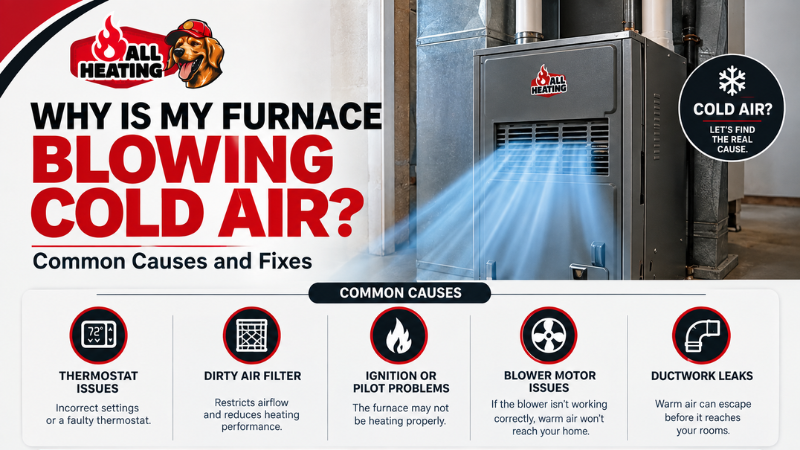
If your furnace is blowing cold air and leaving your home uncomfortable, the problem may be as simple as incorrect thermostat settings or a dirty air filter. In other cases, issues like pilot light failure, overheating, blower motor problems, or duct leaks may require professional HVAC repair. Identifying the cause early can restore heat quickly and prevent more expensive repairs.
There’s nothing more frustrating than turning on your furnace during a cold day only to feel cold air coming from the vents. While this problem can be alarming, it doesn’t always mean your furnace has failed.
Many heating issues have simple solutions that homeowners can safely check before calling a professional. However, some problems involve critical furnace components that should only be repaired by a qualified HVAC technician.
Understanding why your furnace is blowing cold air can help you take the right steps, avoid unnecessary stress, and get your home warm again as quickly as possible.
In this guide, we’ll explain the most common causes, troubleshooting steps you can try, when to call for professional help, and how regular maintenance can prevent future heating problems.
Reasons a Furnace Blows Cold Air
A furnace relies on several components working together to heat your home. If one part isn’t functioning correctly, warm air may never reach your living space.
Below are the most common reasons your furnace may stop heating properly.
Thermostat Settings
Before assuming something is wrong with your furnace, check your thermostat.
Incorrect settings are one of the most common reasons homeowners experience cold air from vents.
Make sure:
- The thermostat is set to Heat
- The temperature setting is above the current room temperature
- The fan is set to Auto, not On
- The batteries are working (if applicable)
If the fan is set to On, it will continue circulating air even when the furnace isn’t actively heating, making it seem like the furnace is blowing cold air.
Simple thermostat problems are often easy to fix without professional service.
Dirty Air Filters
A clogged filter is one of the leading causes of a furnace not heating the house properly.
As dirt builds up, airflow becomes restricted.
Reduced airflow can cause the furnace to overheat, triggering a safety shutdown of the burners while the blower fan continues running.
This means you’ll feel cool air instead of warm air.
Signs of a dirty air filter furnace include:
- Weak airflow
- Uneven heating
- Higher utility bills
- Furnace cycling on and off frequently
Replacing the filter every 1 to 3 months helps prevent these problems.
Pilot Light Problems
Older gas furnaces use a pilot light to ignite the burners.
If the pilot light goes out or the electronic ignition system fails, the burners won’t produce heat.
The blower may still operate, resulting in cool air blowing through your vents.
Possible causes include:
- Dirty flame sensor
- Faulty thermocouple
- Ignition failure
- Gas supply issues
These problems usually require professional diagnosis and repair.
Overheating Issues
Modern furnaces include safety switches that shut off the burners if the system becomes too hot.
Common reasons include:
- Dirty air filters
- Blocked vents
- Blower motor problems
- Restricted airflow
When this happens, the blower fan often keeps running to cool the furnace, causing cold air to circulate through your home.
Ignoring repeated overheating can lead to more serious furnace damage.
Ductwork Leaks
Sometimes the furnace is producing warm air, but it never reaches your rooms.
Leaks in the ductwork allow heated air to escape into crawl spaces, attics, or walls before it reaches the vents.
Common signs include:
- Uneven room temperatures
- Weak airflow
- Higher heating bills
- Some rooms remain cold
Professional duct inspections can identify and seal air leaks, improving comfort and system efficiency.
Blower Motor Problems
The blower motor moves heated air throughout your home.
If the motor is malfunctioning or operating incorrectly, your furnace may struggle to distribute warm air effectively.
Symptoms include:
- Weak airflow
- Unusual noises
- Intermittent heating
- Furnace shutting down unexpectedly
Blower motor repairs should always be handled by qualified HVAC professionals.
Troubleshooting Steps Homeowners Can Take
Before scheduling a service call, there are several simple checks homeowners can safely perform.
Try the following:
- Verify thermostat settings.
- Replace a dirty furnace filter.
- Check that all supply and return vents are open.
- Make sure furniture isn’t blocking airflow.
- Reset the furnace if recommended by the manufacturer.
- Check your circuit breaker if the furnace isn’t operating.
These basic furnace troubleshooting steps often resolve minor heating issues.
However, never attempt to repair gas lines, electrical components, burners, or ignition systems yourself.
Problems That Require Professional Repair
Some furnace problems involve safety risks or specialized equipment.
Contact an HVAC technician if you notice:
- Furnace repeatedly blowing cold air
- Burning smells
- Gas odors
- Loud banging or grinding noises
- Pilot light won’t stay lit
- Error codes on the furnace
- Short cycling
- Carbon monoxide detector alarms
- No heat after replacing the filter
Professional technicians have the tools to safely diagnose and repair complex heating issues.
Delaying repairs may allow small problems to become more expensive over time.
Preventing Future Heating Issues
Routine maintenance is the best way to reduce unexpected furnace problems.
Simple preventive steps include:
- Replace air filters every 1 to 3 months.
- Schedule annual furnace inspections.
- Keep supply and return vents clean.
- Test your thermostat before winter.
- Seal leaking ductwork when necessary.
- Listen for unusual noises during operation.
Annual HVAC repair inspections also allow technicians to identify worn parts before they fail during the heating season.
Preventive maintenance improves reliability, efficiency, and indoor comfort while helping extend the life of your heating system.
Frequently Asked Questions
Why is my furnace running but not heating?
Several issues can cause this problem, including incorrect thermostat settings, dirty air filters, pilot light or ignition failures, overheating, blower motor problems, or duct leaks.
Can a dirty filter cause cold air?
Yes. A clogged air filter restricts airflow, which can cause the furnace to overheat. The burners may shut off while the blower fan continues running, resulting in cool air coming from the vents.
Is it safe to keep running the furnace?
If your furnace is continuously blowing cold air, it’s best to turn it off after basic troubleshooting and contact an HVAC technician. Continuing to operate a malfunctioning furnace may lead to additional damage or safety concerns.
How much does furnace repair cost?
Repair costs vary depending on the problem, the parts required, and the age of the furnace. Minor repairs are usually much less expensive than replacing major components or installing a new heating system.
When should I call an HVAC technician?
Call a professional if replacing the filter and checking the thermostat doesn’t restore heat, or if you notice gas smells, unusual noises, repeated overheating, ignition problems, or your furnace frequently shuts down.
Can thermostat issues cause heating problems?
Yes. Incorrect thermostat settings, dead batteries, faulty wiring, or a malfunctioning thermostat can all prevent your furnace from heating properly.
Restore Warm Comfort Before Small Problems Become Big Repairs
A furnace blowing cold air doesn’t always mean you need a new heating system. Many problems, such as incorrect thermostat settings or a dirty air filter, can be resolved quickly. However, issues involving ignition systems, blower motors, overheating, or ductwork should be inspected by a qualified HVAC technician to ensure safe and reliable operation.
If your furnace is not heating the house, continue after basic troubleshooting; don’t wait for the problem to get worse. Schedule a professional furnace inspection with All Heating Services to identify the cause, restore efficient heating, and keep your home comfortable throughout the winter. Regular maintenance is the best way to prevent unexpected breakdowns and extend the life of your heating system.
