
Best HVAC Solutions for Cleaner Indoor Air
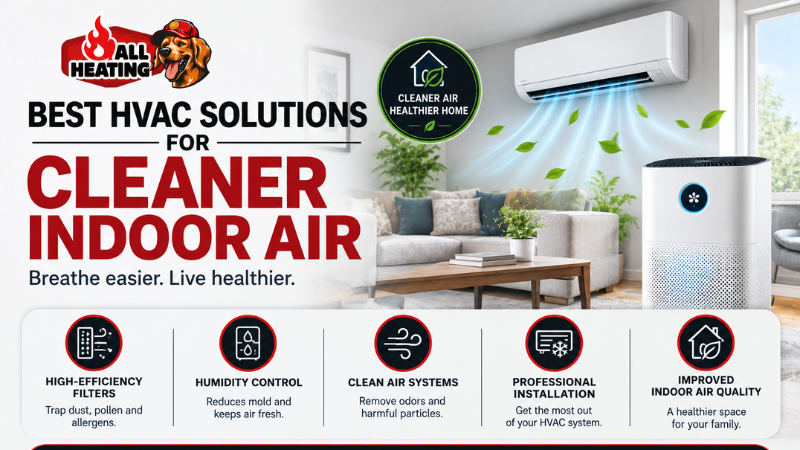
The best indoor air quality solutions combine proper HVAC filtration, air purification, humidity control, and routine system maintenance. High-efficiency air filters, whole-house air purifiers, UV air purification systems, and balanced humidity levels help reduce dust, allergens, pet dander, and other airborne pollutants.
Cleaner Air Starts with the Right HVAC System
Your HVAC system does more than heat and cool your home. It also plays an important role in maintaining the air you breathe every day.
Dust, pet dander, pollen, mold spores, and household pollutants can circulate through your home if they aren’t properly filtered. Over time, these particles may affect comfort, trigger allergies, and reduce your HVAC system’s efficiency.
Fortunately, modern indoor air quality systems are designed to help remove airborne contaminants while improving airflow throughout your home.
In this guide, we’ll explain the most effective indoor air quality solutions, the pollutants they target, and how your HVAC system can help create cleaner indoor air all year long.
Why Indoor Air Quality Is Important for Your Home
Most people spend a large portion of their day indoors. That means the quality of the air inside your home has a direct impact on your comfort and overall well-being.
Poor indoor air may contain pollutants that are invisible to the eye but continue circulating through your HVAC system.
Improving air quality isn’t only about reducing dust. It can also help:
- Improve indoor comfort
- Reduce airborne allergens
- Support better HVAC performance
- Minimize unpleasant odors
- Promote a healthier living environment
The EPA notes that indoor pollutant concentrations can sometimes be higher than outdoor levels, making proper ventilation and filtration especially important.
Benefits of Better Indoor Air Quality
| Benefit | How It Helps Your Home |
| Cleaner indoor air | Reduces airborne particles and everyday pollutants |
| Better HVAC performance | Improves airflow and reduces strain on equipment |
| Fewer indoor allergens | Helps capture pollen, dust, and pet dander |
| More comfortable living spaces | Reduces stale air and unpleasant odors |
| Healthier indoor environment | Supports cleaner air throughout the home |
Common Indoor Air Pollutants Affecting Homeowners
Many indoor pollutants come from everyday household activities. While you may not always notice them, they can continue circulating through your HVAC system if they aren’t properly filtered.
Dust and Allergens
Dust is one of the most common indoor pollutants.
It often contains:
- Dust mites
- Pollen
- Fabric fibers
- Dirt tracked in from outdoors
- Tiny skin particles
Without effective HVAC air filtration, these particles can move through your home’s air every time the heating or cooling system runs.
Replacing HVAC filters regularly is one of the simplest ways to improve indoor air quality.
Pet Dander
Homes with cats or dogs often have additional airborne particles.
Pet dander consists of microscopic flakes of skin that can remain suspended in the air for long periods.
These particles collect on:
- Furniture
- Carpets
- Curtains
- Bedding
- HVAC filters
Installing a whole-house air purifier can help reduce pet-related airborne particles throughout your entire home instead of only treating one room.
Mold Spores
Moisture problems create ideal conditions for mold growth.
Common locations include:
- Basements
- Bathrooms
- Crawl spaces
- Utility rooms
- Around HVAC equipment
As mold spores become airborne, they may spread through your ventilation system.
The EPA’s mold guidance recommends controlling moisture and repairing water leaks promptly to help prevent mold growth indoors.
Volatile Organic Compounds (VOCs)
Volatile Organic Compounds, commonly called VOCs, are gases released from many everyday household products.
Examples include:
- Paints
- Cleaning products
- Furniture finishes
- Adhesives
- Air fresheners
Proper ventilation, source control, and effective air purification systems can help reduce indoor VOC levels.
Common Indoor Air Pollutants
| Pollutant | Typical Source | Potential Impact |
| Dust | Carpets, furniture, and outdoor dirt | Allergy symptoms and dust buildup |
| Pet dander | Cats and dogs | Airborne allergens |
| Mold spores | Damp areas and water damage | Reduced indoor air quality |
| Pollen | Open windows and clothing | Seasonal allergies |
| VOCs | Household products and building materials | Indoor air pollution |
Best HVAC Solutions for Cleaner Indoor Air
Not every indoor air quality problem requires the same solution. Modern HVAC equipment offers several ways to improve air quality based on your home’s specific needs.
The most effective approach often combines multiple indoor air quality systems instead of relying on a single product.
High-Efficiency Air Filters
Your HVAC filter is the first layer of protection against airborne contaminants.
High-efficiency filters are designed to capture smaller particles than standard filters while maintaining proper airflow when correctly matched to your HVAC system.
These filters can help reduce:
- Dust
- Pollen
- Pet dander
- Lint
- Other airborne particles
Whole-Home Air Purifiers
While standard HVAC filters capture many larger particles, a whole-house air purifier provides an additional layer of protection by treating the air as it moves through your HVAC system.
Unlike portable air purifiers that only clean the air in one room, a whole-home system helps improve air quality throughout your entire house.
Depending on the type of system installed, it can help reduce:
- Fine dust particles
- Pet dander
- Pollen
- Mold spores
- Certain airborne bacteria and viruses
For homes with pets, allergy sufferers, or larger families, a whole-home air purifier can be a valuable addition to an HVAC system.
UV Air Purification Systems
UV air purification systems use ultraviolet light to help reduce biological contaminants inside HVAC equipment.
These systems are commonly installed near:
- Evaporator coils
- Air handlers
- HVAC ductwork
UV technology is primarily used to help control:
- Mold growth
- Bacteria
- Certain microorganisms
According to the EPA’s Guide to Air Cleaners in the Home, UV systems are most effective when combined with proper filtration and regular HVAC maintenance rather than used as a standalone solution.
Humidity Control Systems
Humidity plays a major role in maintaining comfortable and healthy indoor air.
If humidity levels are too high, mold and mildew can develop more easily. If they’re too low, you may notice:
- Dry skin
- Dry eyes
- Static electricity
- Cracked wood furniture
- Dry indoor air
Whole-home humidity control systems help maintain balanced moisture levels throughout the year.
Regular HVAC Maintenance
Even the best indoor air quality systems cannot perform properly without routine maintenance.
Professional HVAC maintenance helps ensure that:
- Filters remain clean
- Airflow stays unrestricted
- HVAC components operate efficiently
- Indoor pollutants are minimized
- Air purification equipment performs as intended
Scheduling regular maintenance also allows technicians to identify small issues before they affect your home’s air quality.
Comparing Indoor Air Quality Solutions
| Solution | Best For | Primary Benefit |
| High-Efficiency Air Filters | Everyday air filtration | Captures dust, pollen, and airborne particles |
| Whole-Home Air Purifier | Whole-house air cleaning | Improves indoor air quality throughout the home |
| UV Air Purification System | Controlling biological contaminants | Helps reduce mold and bacteria inside HVAC equipment |
| Humidity Control System | Moisture management | Maintains healthy indoor humidity levels |
| Routine HVAC Maintenance | Long-term system performance | Supports cleaner air and efficient HVAC operation |
How to Maintain Healthy Indoor Air Year-Round
Installing air quality equipment is only part of the solution. Regular maintenance and simple household habits help keep your home’s air cleaner throughout every season.
Filter Replacement Best Practices
One of the easiest ways to improve indoor air is by replacing HVAC filters on schedule.
A clean filter helps:
- Improve airflow
- Capture airborne particles
- Reduce dust buildup
- Support better HVAC efficiency
Check your HVAC filter monthly, especially during periods of heavy heating or cooling use. Replace it according to the manufacturer’s recommendations or sooner if it appears dirty.
Importance of Professional HVAC Inspections
Routine inspections help ensure your HVAC system continues operating efficiently while supporting better indoor air quality.
During an inspection, an HVAC technician may:
- Inspect air filters
- Check airflow
- Examine ductwork
- Clean internal components
- Test indoor air quality equipment
- Verify system performance
Indoor Air Quality Maintenance Checklist
| Maintenance Task | Recommended Frequency |
| Check the HVAC filter | Every month |
| Replace the HVAC filter | Every 1–3 months |
| Professional HVAC inspection | Once a year |
| Clean air vents and registers | Every few months |
| Inspect humidity levels | Seasonally |
| Service air purification equipment | As recommended by the manufacturer |
FAQs
What are the best HVAC solutions for improving indoor air quality?
The most effective indoor air quality solutions include high-efficiency HVAC filters, whole-home air purifiers, UV air purification systems, humidity control systems, and regular HVAC maintenance. Combining these solutions often delivers the best results.
How can I make the air in my home cleaner?
Replace HVAC filters regularly, improve ventilation, control indoor humidity, schedule routine HVAC maintenance, and consider installing a whole-home air purifier to reduce airborne pollutants.
Do whole-home air purifiers really work?
Yes. Whole-home air purifiers work with your HVAC system to help remove airborne particles throughout your home, providing more consistent air cleaning than portable units that only treat individual rooms.
Can poor indoor air quality affect my health?
Yes. Poor indoor air quality may contribute to allergy symptoms, respiratory irritation, headaches, and general discomfort, especially for individuals with asthma or allergies.
Are HVAC air filters enough to improve indoor air quality?
HVAC filters are an important first step, but they may not remove every type of indoor pollutant. Combining quality air filtration with air purification, humidity control, and regular maintenance provides more comprehensive indoor air quality improvement.
How often should HVAC systems be serviced for better air quality?
Most HVAC systems should be professionally serviced once a year. Regular maintenance helps keep filters, airflow, and indoor air quality equipment operating efficiently.
Invest in Cleaner Air for a Healthier Home
Creating cleaner indoor air takes more than replacing an air filter. The right combination of indoor air quality solutions, including high-efficiency filtration, whole-home air purifiers, humidity control, and routine HVAC maintenance, can help reduce airborne pollutants and improve comfort throughout your home. By taking a proactive approach, you can enjoy healthier indoor air and help your HVAC system perform at its best year-round.
If you’re looking for reliable indoor air quality solutions, All Heating Services can help. Our experienced team can assess your home’s air quality, recommend the right HVAC upgrades, and install solutions tailored to your needs. Contact us today to schedule an indoor air quality consultation and start enjoying a cleaner, healthier home.
