How Often Should Furnace Filters Be Changed in Everett?
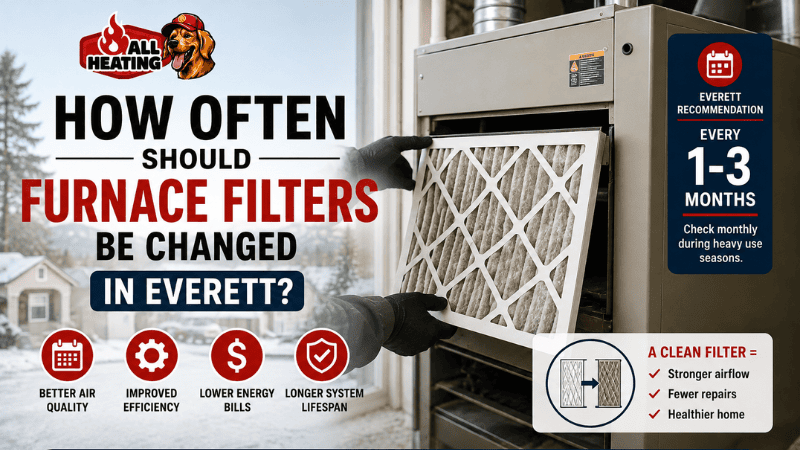
Most homeowners should schedule furnace filter replacement Everett every 1 to 3 months, depending on the type of filter, the number of pets in the home, allergy concerns, and how often the heating system runs. Replacing a dirty filter improves furnace efficiency, supports better indoor air quality, lowers energy use, and helps prevent unnecessary wear on your HVAC system.
Your furnace filter is one of the smallest parts of your heating system, but it has one of the biggest impacts on comfort, energy efficiency, and indoor air quality.
Many homeowners don’t think about their furnace filter until they notice weak airflow or higher heating bills. Unfortunately, waiting too long to replace a filter can force your furnace to work harder, increase energy costs, and even lead to expensive repairs.
Fortunately, replacing a furnace filter is one of the easiest and most affordable maintenance tasks you can do.
In this guide, we’ll explain how often to replace your furnace filter, what affects replacement frequency, signs that it’s time for a new filter, and how regular filter changes keep your heating system running efficiently in Everett.
Why Furnace Filter Replacement Matters
A furnace filter traps dust, dirt, pollen, pet hair, and other airborne particles before they enter your heating system.
As the filter collects debris, airflow gradually becomes restricted.
When airflow decreases, your furnace has to work harder to move warm air throughout your home.
Regular furnace maintenance Everett includes checking and replacing filters because clean filters help:
- Improve airflow
- Reduce strain on the furnace
- Lower heating costs
- Protect internal HVAC components
- Improve indoor air quality
- Extend furnace lifespan
Ignoring a dirty filter may seem like a small issue, but over time, it can affect the performance and reliability of your entire heating system.
How Often Should You Change Your Furnace Filter?
There isn’t one replacement schedule that works for every home.
The ideal timing depends on several factors, including your filter type, household size, pets, allergies, and how often your furnace operates.
Standard Filter Replacement Guidelines
A good general rule is:
| Filter Type | Recommended Replacement |
| 1-inch fiberglass filter | Every 30 days |
| 1-inch pleated filter | Every 60–90 days |
| High-efficiency filter | Every 6–12 months (check manufacturer recommendations) |
Even if your filter isn’t due for replacement, it’s a good idea to inspect it once a month during the heating season.
If it looks dirty, replace it sooner.
Factors That Affect Replacement Frequency
Some homes require more frequent HVAC filter replacement than others.
You may need to replace your filter more often if:
- You have multiple pets.
- Someone in your home has allergies or asthma.
- You use your furnace daily during winter.
- Your home has ongoing construction or renovation.
- You live in an area with higher levels of dust or pollen.
Everett homeowners with pets or allergy concerns often benefit from checking filters monthly.
Signs Your Furnace Filter Needs Replacing
Not sure whether it’s time for a new filter?
Your heating system will often give you several warning signs.
Reduced Airflow
One of the first signs of a clogged filter is weak airflow from your vents.
If warm air doesn’t seem to reach every room as effectively as before, restricted airflow may be limiting your furnace’s performance.
Replacing the filter is often the quickest solution.
Higher Energy Bills
A dirty filter forces your furnace to work harder to circulate air.
The extra workload increases energy consumption, which may lead to noticeably higher heating bills.
Replacing your filter regularly can help improve furnace efficiency and reduce unnecessary energy use.
Increased Dust Around the Home
If you’re dusting furniture more often than usual, your furnace filter may no longer be capturing airborne particles effectively.
Common signs include:
- Dust is collecting on furniture
- Dust near air vents
- More visible airborne particles
- Dirty vent covers
A fresh filter helps reduce the amount of dust circulating throughout your home.
Poor Indoor Air Quality
A clogged filter can’t trap contaminants as effectively.
This may contribute to poor indoor air quality in Everett, especially for people with allergies or respiratory sensitivities.
You may notice:
- More sneezing
- Allergy flare-ups
- Musty odors
- Increased airborne dust
- Less fresh indoor air
Replacing the filter improves air circulation and helps remove more airborne particles from your home’s heating system.
Benefits of Regular Filter Changes
Changing your furnace filter is one of the simplest ways to protect your HVAC investment.
Here are some of the biggest benefits.
Better Heating Performance
Clean filters allow warm air to move freely throughout your ductwork.
This helps your furnace:
- Heat rooms more evenly
- Reach the desired temperature faster
- Maintain consistent comfort
Better airflow means your furnace doesn’t have to work as hard to keep your home warm.
Longer Furnace Lifespan
Restricted airflow places additional stress on major furnace components such as:
- Blower motors
- Heat exchangers
- Fans
- Electrical systems
Routine furnace filter replacement in Everett helps reduce wear and tear, allowing your heating system to last longer.
Improved Energy Efficiency
A clean filter helps your heating system operate closer to its intended efficiency.
Benefits include:
- Lower energy consumption
- Reduced monthly heating bills
- Less strain on HVAC equipment
- Improved overall performance
Combined with annual furnace maintenance, regular filter replacement is one of the easiest ways to improve system efficiency.
Tips for Getting the Most from Your Furnace Filter
Changing your filter regularly is important, but a few additional habits can improve your heating system even more.
Consider these simple maintenance tips:
- Check your furnace filter every month during winter.
- Replace the filter before it becomes completely clogged.
- Use the correct filter size recommended by your furnace manufacturer.
- Keep return air vents clean and unobstructed.
- Schedule professional furnace maintenance once a year.
- Keep furniture from blocking supply vents.
These simple habits help improve airflow and keep your furnace operating efficiently throughout Everett’s heating season.
Frequently Asked Questions
How often should a furnace filter be changed?
Most furnace filters should be replaced every 1 to 3 months, depending on the filter type, household conditions, pets, and how often the heating system is used.
What happens if I don’t replace my furnace filter?
A dirty filter restricts airflow, reduces furnace efficiency, increases energy bills, lowers indoor comfort, and may eventually cause unnecessary wear or damage to your HVAC system.
How do I know if my furnace filter is dirty?
Signs include reduced airflow, more dust inside your home, higher heating bills, uneven heating, and a filter that appears gray or clogged with debris.
Can changing a furnace filter lower energy bills?
Yes. A clean filter allows your furnace to move air more efficiently, reducing the amount of energy needed to heat your home.
Do pets affect how often I should replace my furnace filter?
Yes. Pet hair and dander fill filters more quickly. Homes with one or more pets often need more frequent filter replacements than homes without pets.
Does replacing a furnace filter improve indoor air quality?
Yes. Clean filters capture more dust, pollen, pet dander, and other airborne particles, helping improve indoor air quality and creating a healthier home environment.
Keep Your Furnace Running Efficiently All Winter
Regular furnace filter replacement in Everett is one of the easiest and most effective ways to protect your heating system. Replacing your filter every 1 to 3 months helps improve furnace efficiency, supports cleaner indoor air, reduces energy costs, and extends the life of your HVAC equipment. It also helps your home stay warm and comfortable throughout Everett’s colder months.
If you’re unsure which filter is right for your furnace or it’s time for your annual furnace maintenance in Everett, contact a trusted HVAC professional, All Heating Services. Routine maintenance and timely filter changes will keep your heating system operating safely, efficiently, and reliably for many winters to come.
