Emergency Heating Repair Guide for Snohomish Homeowners
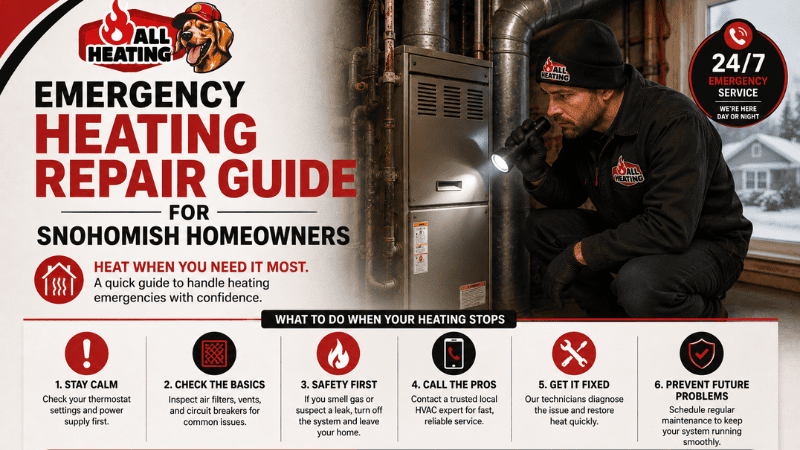
Losing heat during the winter can quickly become a serious problem, especially when outdoor temperatures drop. If you’re dealing with emergency heating repair in Snohomish, start by checking your thermostat, furnace filter, power supply, and any error codes on your heating system. If your furnace won’t turn on, you smell gas, notice burning odors, or suspect a carbon monoxide issue, leave the home if necessary and contact your utility company or emergency HVAC service immediately.
When Your Heat Stops Working, Every Minute Matters
A heating system can stop working without warning. Whether it’s early in the morning or during a cold Snohomish evening, losing heat isn’t just inconvenient; it can affect your comfort and, in some situations, your safety.
While some heating issues have simple solutions, others require immediate professional attention. Knowing what to check before calling for service can save time and help you explain the problem to your HVAC technician.
This guide explains what counts as a heating emergency, the first troubleshooting steps to take, and when it’s time to request emergency furnace repair.
What Qualifies as a Heating Emergency?
Not every heating problem requires emergency service. However, certain situations should never be ignored.
A heating emergency is any issue that creates a safety risk or leaves your home without reliable heat during cold weather.
Call for Emergency HVAC Service Immediately If You Notice:
- Your furnace stops producing heat during freezing temperatures.
- You smell natural gas near your furnace.
- A carbon monoxide detector goes off.
- You notice smoke or burning electrical odors.
- Your heating system repeatedly shuts down after restarting.
- You hear loud banging, grinding, or screeching noises.
- Water is leaking into electrical components.
- Your heat pump or furnace displays critical fault codes.
If you ever suspect a gas leak or carbon monoxide problem:
- Leave the home immediately.
- Do not operate electrical switches.
- Contact your gas utility company.
- Call emergency services if needed.
The U.S. Consumer Product Safety Commission’s carbon monoxide safety guidance recommends leaving the building immediately if a carbon monoxide alarm sounds.
Heating Issue or Heating Emergency?
| Situation | Emergency? | Recommended Action |
| Furnace won’t start during freezing weather | Yes | Contact an emergency HVAC technician. |
| Carbon monoxide alarm sounds | Yes | Leave the home and call emergency services. |
| Gas smell near the furnace | Yes | Evacuate and contact your gas utility immediately. |
| Furnace making unusual noises | Possibly | Turn the system off and schedule an inspection. |
| Uneven heating in one room | No | Schedule a routine heating inspection. |
| Dirty air filter | No | Replace the filter and monitor system performance. |
Immediate Steps to Take When Your Heating System Stops Working
Before requesting emergency heating repair in Snohomish, there are a few simple checks that homeowners can safely perform.
Some heating interruptions are caused by minor issues that can be resolved without repairs.
Check Your Thermostat Settings
Start with the thermostat.
Confirm that:
- The thermostat is set to Heat.
- The temperature is set higher than the current room temperature.
- The display is working properly.
- Batteries (if applicable) still have power.
If your thermostat recently lost power, it may need to restart before communicating with your heating system.
Inspect the Furnace Filter
A clogged air filter can reduce airflow enough to affect system performance.
Signs of a dirty filter include:
- Weak airflow
- Furnace cycling on and off
- Rooms not warming properly
- Increased dust around vents
If the filter looks dirty, replace it with a new filter that matches the manufacturer’s recommended size and rating.
Verify Circuit Breakers and Power Supply
Sometimes the problem isn’t the furnace itself.
Check:
- The HVAC circuit breaker
- The furnace power switch
- Any nearby disconnect switches
- Electrical outlets connected to the thermostat (if applicable)
If a breaker has tripped once, reset it carefully.
If it trips again immediately, avoid resetting it repeatedly and contact a qualified HVAC technician or electrician.
Look for Warning Lights or Error Codes
Many modern furnaces include diagnostic lights or digital displays that help identify problems.
Common indicators may point to:
- Ignition faults
- Pressure switch issues
- Flame sensor problems
- Airflow restrictions
- Blower motor faults
Write down any flashing light pattern or error code before calling for service. This information can help your technician diagnose the issue more quickly.
Homeowner Heating Troubleshooting Checklist
| Check | What to Look For | Safe for Homeowner? |
| Thermostat | Heat mode, correct temperature, working display | Yes |
| Furnace Filter | Dirty or clogged filter | Yes |
| Circuit Breaker | Tripped breaker or switched off furnace | Yes |
| Power Switch | The furnace power switch turned off | Yes |
| Error Codes | Flashing lights or display messages | Observe only |
| Gas Smell | Any odor of natural gas | Leave immediately and call your gas utility |
When to Stop Troubleshooting
Homeowners can safely perform basic checks, but you should stop troubleshooting if you notice:
- Gas odors
- Smoke
- Burning smells
- Electrical sparking
- Water around electrical components
- Carbon monoxide alarms
- Loud mechanical noises
These situations require professional emergency HVAC service and should not be handled without proper training.
Common Causes of Emergency Heating Repairs
Even a well-maintained heating system can develop unexpected problems. Knowing what commonly causes a heating system breakdown can help you recognize warning signs and take action before the issue becomes more serious.
Ignition System Failures
Your furnace’s ignition system is responsible for starting the heating cycle. If it fails, the furnace may not produce heat at all.
Common signs include:
- The furnace won’t start.
- You hear repeated clicking sounds.
- The system starts and then shuts off.
- The blower runs, but no warm air comes from the vents.
Ignition problems can result from worn components, dirty flame sensors, or electrical faults. Because these parts involve gas and electricity, repairs should always be performed by a qualified HVAC technician.
Blower Motor Problems
The blower motor pushes heated air through your home’s ductwork. If it stops working properly, your furnace may produce heat, but the warm air won’t reach your living spaces.
Possible warning signs include:
- Little or no airflow from vents
- Unusual humming or grinding noises
- The blower runs continuously
- The system frequently shuts down
A failing blower motor should be inspected promptly to avoid additional damage to the heating system.
Clogged Air Filters
A clogged filter is one of the simplest problems, but it can still contribute to a furnace not working properly.
When airflow becomes restricted, the furnace may:
- Overheat
- Shut down as a safety precaution
- Run longer than normal
- Deliver weak airflow
Replacing the filter regularly helps maintain proper airflow and reduces unnecessary strain on the system.
Thermostat Malfunctions
Sometimes the heating equipment isn’t the problem at all.
A faulty thermostat may:
- Display incorrect temperatures
- Fail to communicate with the furnace
- Turn the system on and off unexpectedly
- Prevent the heating cycle from starting
If replacing the batteries or adjusting the settings doesn’t solve the issue, the thermostat may need professional testing or replacement.
Frozen Heat Pump Components
Homes with heat pumps may experience frozen outdoor units during periods of snow, ice, or freezing temperatures.
While modern systems include a defrost cycle, excessive ice buildup may indicate:
- Restricted airflow
- Refrigerant issues
- Defrost control problems
- Outdoor fan malfunctions
If the outdoor unit remains completely covered in ice or the system stops heating your home, it’s time to contact an HVAC professional rather than attempting to remove the ice yourself.
Common Emergency Heating Problems
| Problem | Possible Symptoms | Professional Service Needed? |
| Ignition failure | Furnace won’t start or repeatedly shuts off | Yes |
| Blower motor failure | Weak or no airflow | Yes |
| Clogged air filter | Reduced airflow and overheating | Sometimes |
| Thermostat malfunction | Incorrect temperatures or no response | Sometimes |
| Frozen heat pump | Ice buildup and poor heating performance | Yes |
How to Prevent Heating Emergencies in Snohomish
While some breakdowns happen unexpectedly, many emergency repairs can be avoided with regular care and early attention to warning signs.
A proactive approach can improve system reliability throughout the heating season.
Schedule Annual Heating Inspections
Having your heating system inspected before winter allows technicians to identify worn components before they fail.
Routine inspections may include:
- Checking electrical connections
- Inspecting burners and ignition components
- Testing safety controls
- Verifying airflow
- Examining the blower assembly
Replace Air Filters on Schedule
Clean filters allow your heating system to move air efficiently throughout your home.
Check your filter every month during heavy heating use and replace it according to the manufacturer’s recommendations or sooner if it becomes dirty.
Pay Attention to Early Warning Signs
Many heating emergencies are preceded by small changes in system performance.
Don’t ignore:
- Unusual noises
- Burning odors
- Longer heating cycles
- Weak airflow
- Frequent system resets
- Inconsistent indoor temperatures
Addressing these issues early may help prevent a complete heating system breakdown.
Keep Outdoor Equipment Clear
If your home uses a heat pump, keep the outdoor unit free from:
- Snow
- Ice buildup
- Leaves
- Branches
- Yard debris
Proper airflow around the unit helps maintain reliable heating performance during winter.
Emergency Heating Prevention Checklist
| Preventive Action | Recommended Frequency |
| Schedule professional heating maintenance | Once a year |
| Inspect the HVAC filter | Monthly during heating season |
| Replace the dirty air filter | Every 1–3 months |
| Test thermostat operation | Before winter |
| Check carbon monoxide detectors | Monthly |
| Clear debris around the outdoor heat pump | As needed |
FAQs
What should I do if my furnace stops working in winter?
Start by checking your thermostat settings, furnace filter, circuit breaker, and power supply. If the system still doesn’t operate or you notice gas odors, burning smells, or a carbon monoxide alarm, leave the home if necessary and contact an emergency HVAC professional immediately.
What is considered an HVAC emergency?
An HVAC emergency includes situations such as no heat during freezing weather, gas leaks, carbon monoxide alarms, electrical burning smells, smoke, or major system failures that affect your home’s safety.
Why did my heating system suddenly stop working?
Common causes include ignition failures, thermostat problems, power interruptions, blower motor issues, clogged filters, or frozen heat pump components.
Can a dirty furnace filter cause a heating emergency?
Yes. A severely clogged filter can restrict airflow, cause the furnace to overheat, and trigger safety shutdowns that prevent the system from operating correctly.
How can I avoid emergency heating repairs?
Scheduling annual maintenance, replacing filters regularly, responding to unusual noises or odors, and addressing small problems early can reduce the risk of emergency breakdowns.
Should I turn off my furnace if it is making strange noises?
Yes. If your furnace produces loud banging, grinding, screeching, or burning smells, turn the system off and arrange for a professional inspection. Continuing to operate the furnace could lead to additional damage or create a safety concern.
Stay Prepared for Unexpected Heating Problems
A sudden loss of heat can be stressful, especially during Snohomish’s colder months. Knowing how to respond, recognizing the warning signs of a serious problem, and taking simple troubleshooting steps can help you stay safe while minimizing downtime. Regular maintenance and prompt attention to unusual system behavior remain the best ways to reduce the risk of emergency repairs.
If you need emergency heating repair in Snohomish, All Heating Services is ready to help. Our experienced technicians can quickly diagnose heating problems, restore your system safely, and help keep your home warm when you need it most. Contact us today for fast, dependable emergency HVAC service.
