8 Reasons Your AC Is Running but Not Cooling Your Home
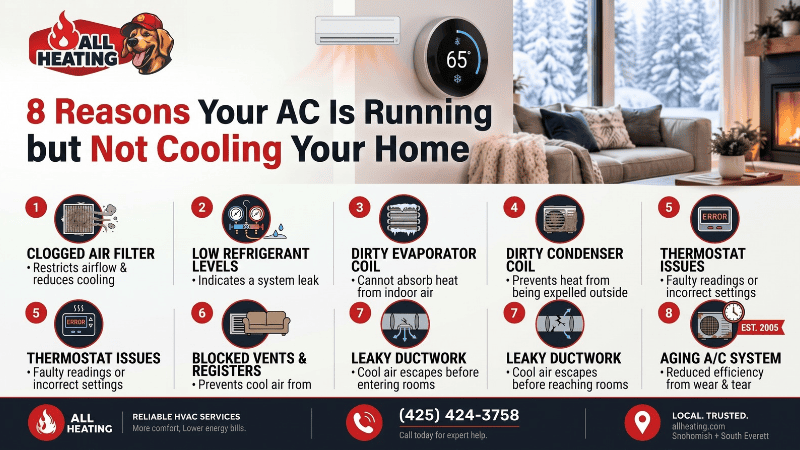
If your AC is running but not cooling, the problem may be caused by a dirty air filter, incorrect thermostat settings, restricted airflow, dirty coils, refrigerant issues, or an electrical or mechanical fault. Homeowners can safely check the thermostat, filter, and visible airflow first. If the AC continues blowing warm air or the issue involves refrigerant, electrical components, or internal parts, professional AC repair is recommended.
Few things are more frustrating than hearing your air conditioner running while your home continues to feel warm.
The system may turn on normally, air may come from the vents, and the outdoor unit may appear to be operating. Yet the temperature inside doesn’t seem to change.
There are several possible explanations.
Some are simple issues that homeowners can check themselves. Others require professional testing because they involve refrigerant, electrical components, coils, or mechanical parts.
Understanding the common causes can help you troubleshoot the problem without guessing.
Why Is My AC Running but Not Cooling?
When an air conditioner runs without adequately cooling the home, something is preventing the system from completing the cooling process effectively.
The issue may involve airflow, temperature controls, the indoor coil, outdoor equipment, refrigerant, or another component.
Dirty Air Filter
A dirty filter is one of the first things to check when your AC is not cooling properly.
As dust accumulates on the filter, airflow through the system can become restricted.
Reduced airflow can affect how effectively the air conditioner removes heat from your home.
You may notice:
- Weak airflow from vents
- Longer cooling cycles
- Poor cooling in certain rooms
- Less air coming from registers
- The system running without reaching the thermostat setting
Check your filter regularly and replace it when necessary using the correct size and type recommended for your equipment.
A filter should not be left in place until it becomes heavily loaded with dust.
Thermostat Problems
Sometimes the air conditioner isn’t actually the problem.
Incorrect thermostat settings or a thermostat issue can make it appear that your AC isn’t cooling properly.
Start by checking:
- The thermostat is set to Cool.
- The desired temperature is below the current indoor temperature.
- The fan setting is appropriate.
- The thermostat has power.
- The displayed indoor temperature appears reasonable.
If the thermostat isn’t communicating correctly with the HVAC system, the AC may not operate as expected.
If adjusting the settings doesn’t solve the problem, professional diagnosis may be necessary.
Common AC Problems That Cause Poor Cooling
When basic checks don’t explain the issue, the problem may be within the air conditioning system itself.
Here are some common possibilities.
Refrigerant Problems
Refrigerant is an essential part of the cooling process.
An air conditioner doesn’t normally consume refrigerant during regular operation. If the system has a low refrigerant charge, there may be a leak or another problem that needs to be diagnosed.
Possible signs can include:
- AC running for long periods
- Reduced cooling
- Ice developing on components
- Warm air from the vents
- Outdoor equipment operating without adequate cooling
Adding refrigerant without finding the cause isn’t a complete solution.
Refrigerant systems require specialized equipment and should be handled by a qualified HVAC professional.
The U.S. Environmental Protection Agency (EPA) provides guidance on refrigerant handling and requirements for technicians working with stationary air-conditioning equipment.
Dirty Coils
Your AC relies on heat transfer between the indoor and outdoor sections of the system.
If coils become significantly dirty, heat transfer can be affected.
The indoor evaporator coil and outdoor condenser coil perform different jobs, but both need to operate properly for the system to cool effectively.
A dirty outdoor condenser coil, for example, can make it more difficult for the system to release heat outdoors.
Depending on the condition of the equipment, professional cleaning may be necessary.
Restricted Airflow
Airflow problems can also cause an air conditioner to struggle with cooling.
A dirty filter is one possibility, but it isn’t the only one.
Other airflow problems can include:
- Blocked return vents
- Closed supply registers
- Damaged ductwork
- Restricted ducts
- Blower problems
- Dirty internal components
If some rooms are cooling while others remain warm, airflow and ductwork deserve particular attention.
Outdoor Unit Problems
The outdoor unit plays an important role in the cooling cycle.
If the outdoor equipment isn’t operating correctly, the AC may continue running without producing the expected cooling.
Possible issues include:
- Electrical component failure
- Fan motor problems
- Restricted airflow around the unit
- Dirty condenser coil
- Compressor problems
Homeowners can make sure the area around the outdoor unit is reasonably clear, but internal electrical and mechanical problems should be diagnosed by a professional.
Electrical Problems
An air conditioner contains several electrical components that help control and operate the system.
A failure involving a capacitor, contactor, wiring, disconnect, or another electrical component can prevent the AC from cooling properly.
Electrical issues aren’t appropriate for DIY repair.
If you notice burning smells, damaged wiring, sparks, or repeated breaker trips, stop using the equipment and have it inspected by a qualified professional.
Frozen Evaporator Coil
An AC that isn’t cooling can sometimes develop ice on the indoor coil or refrigerant lines.
This may seem counterintuitive because the system is supposed to make the home colder.
However, ice can interfere with airflow and heat transfer.
A frozen coil can be associated with issues such as:
- Restricted airflow
- Dirty filters
- Refrigerant problems
- Mechanical issues
If you notice significant ice buildup, don’t attempt to remove it with tools.
Turn the system off and allow it to thaw, then have the underlying problem investigated if the issue returns.
Aging or Failing Components
Older air conditioners can experience a range of mechanical problems as components wear.
An AC may still turn on even when one of its components isn’t performing correctly.
If your system is:
- Frequently breaking down
- Struggling to cool the home
- Requiring repeated repairs
- Producing unusual sounds
- Increasingly difficult to maintain
it may be time for a professional evaluation.
That doesn’t automatically mean replacement is necessary. The cost and condition of the equipment should be considered before making a decision.
What Can Homeowners Check First?
Not every air conditioning problem requires an immediate service call.
There are a few basic checks you can safely perform before contacting an HVAC professional.
Check Thermostat Settings
Start with the thermostat.
Confirm that:
- The system is set to Cool.
- The temperature is set below the current indoor temperature.
- The fan setting hasn’t been changed unintentionally.
- The thermostat has power.
- The system responds when you adjust the temperature.
If everything appears correct but the AC continues to produce warm air, move on to the next check.
Inspect the Air Filter
Look at the HVAC filter.
If it is visibly dirty or heavily loaded with dust, replace it with the correct filter.
Don’t install a filter that doesn’t fit properly.
Also, avoid assuming that the highest filtration rating is always the best choice. Your HVAC system needs adequate airflow, and filter selection should be compatible with the equipment.
Check Supply and Return Vents
Walk through the home and make sure supply vents are open.
Also check that return vents aren’t blocked by:
- Furniture
- Curtains
- Boxes
- Rugs
- Other household items
If only one or two rooms are warm, the problem may be related to airflow distribution rather than the cooling equipment itself.
Look at the Outdoor Unit
Check the area around your outdoor AC unit.
Remove obvious leaves, grass, or other debris that may be restricting the unit’s airflow.
Don’t open electrical panels or attempt to repair internal components.
If the outdoor unit isn’t operating normally, professional inspection is the safer option.
When Does Your AC Need Professional Repair?
Some problems are difficult to diagnose without specialized HVAC tools.
If basic checks don’t restore cooling, professional AC repair may be necessary.
Persistent Warm Air
If the system continues blowing warm or only slightly cool air after you’ve checked the thermostat and filter, there may be a deeper problem.
A technician can evaluate the complete cooling system to determine what is preventing normal operation.
Don’t continue running an AC that clearly isn’t functioning correctly for extended periods.
Refrigerant or Electrical Problems
Refrigerant and electrical issues require professional attention.
A technician can use appropriate diagnostic equipment to determine whether the system has:
- A refrigerant leak
- Incorrect refrigerant charge
- Electrical component failure
- Compressor problems
- Control issues
- Other mechanical faults
Simply adding refrigerant without identifying why the system is low isn’t a proper long-term repair.
AC Troubleshooting Checklist
| What You Notice | What to Check First |
| AC running but not cooling | Thermostat and filter |
| AC blowing warm air | Thermostat, filter, airflow |
| Weak airflow | Filter, vents, return air |
| One room stays warm | Vents and ductwork |
| Ice on AC components | Filter, airflow, professional inspection |
| Outdoor unit isn’t working | Power and professional diagnosis |
| Cooling problem continues | Professional AC inspection |
This checklist can help you identify simple issues, but persistent problems require proper diagnosis.
How to Avoid Common AC Cooling Problems
Regular attention can help you catch problems before they become major cooling failures.
Keep the Filter Maintained
Check your filter regularly and replace it when needed.
Keep Vents Clear
Don’t block supply or return registers with furniture or household items.
Keep the Outdoor Unit Clear
Maintain reasonable clearance around the outdoor equipment and remove visible debris.
Pay Attention to Changes
If your AC suddenly takes much longer to cool the home, produces unusual sounds, or develops weak airflow, don’t ignore the change.
Schedule Professional Maintenance
Regular HVAC maintenance can help identify developing problems and keep your equipment operating according to its design.
FAQs
Why is my AC running but not cooling?
Your AC may be running without cooling because of a dirty filter, thermostat problem, restricted airflow, dirty coils, refrigerant issues, electrical problems, or a failing component. Start with the thermostat and filter before arranging professional service.
Why is my AC blowing warm air?
Warm air can result from incorrect thermostat settings, restricted airflow, refrigerant problems, outdoor unit issues, or mechanical and electrical faults. If basic thermostat and filter checks don’t help, professional diagnosis may be needed.
Can a dirty filter make an AC stop cooling?
A heavily clogged filter can restrict airflow and reduce cooling performance. In severe cases, restricted airflow can contribute to other problems, including coil icing. Check and replace the filter according to your equipment’s requirements.
How do I troubleshoot an AC that is not cooling?
Start by checking the thermostat settings, air filter, supply vents, return vents, and visible conditions around the outdoor unit. Avoid opening electrical panels or working with refrigerant. If the problem continues, contact an HVAC professional.
How do I know if my AC needs refrigerant?
Poor cooling, long run times, ice buildup, or other symptoms can occur when refrigerant levels are incorrect, but these signs don’t prove that refrigerant is the problem. A qualified technician should test the system and determine whether a leak or other issue exists.
When should I call an AC repair technician?
Call an HVAC professional when your AC continues blowing warm air after basic checks, airflow remains weak, the system repeatedly freezes, the outdoor unit isn’t operating correctly, breakers keep tripping, or you suspect refrigerant, electrical, or mechanical problems.
Get Your AC Cooling Again
When your AC is running but not cooling, don’t immediately assume that the entire system needs to be replaced.
A dirty filter, thermostat setting, blocked vent, or airflow restriction may be enough to cause noticeable cooling problems. If those basic checks don’t resolve the issue, the problem may involve refrigerant, coils, electrical components, or other internal equipment.
Addressing the problem early can help you understand whether a simple repair is enough or whether the system needs a more comprehensive solution.
If your AC is not cooling and you can’t identify the cause, All Heating Services can inspect the system and determine what is affecting its performance. Contact us for professional AC repair and cooling service in the Snohomish and Everett area.
